
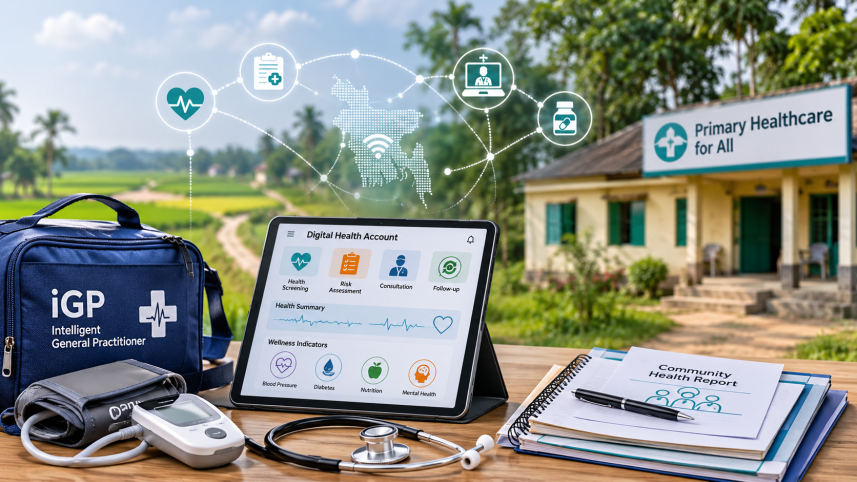
In Bangladesh, even for common illnesses such as fever, headaches or high blood pressure, many people bypass nearby primary healthcare facilities and head directly to large hospitals. The result is overcrowded hospitals, rising healthcare costs, longer waiting times and delayed treatment. Yet, evidence from the World Health Organization (WHO) suggests that nearly 80 percent of health problems can be prevented or effectively managed at the primary care level through timely preventive healthcare.
The underlying challenge is the limited access to and utilisation of preventive and primary healthcare. Preventive and primary healthcare is still not part of everyday life for most citizens. Routine screening, early risk assessment, and health education and awareness are often overlooked until illness becomes severe. Many people do not prioritise preventive services, and spending money on healthcare is frequently seen as necessary only when disease strikes. This mindset leads to delayed treatment, increased complications, and rising healthcare costs for families. It also places an unsustainable burden on hospitals that should primarily be serving patients requiring specialized care.