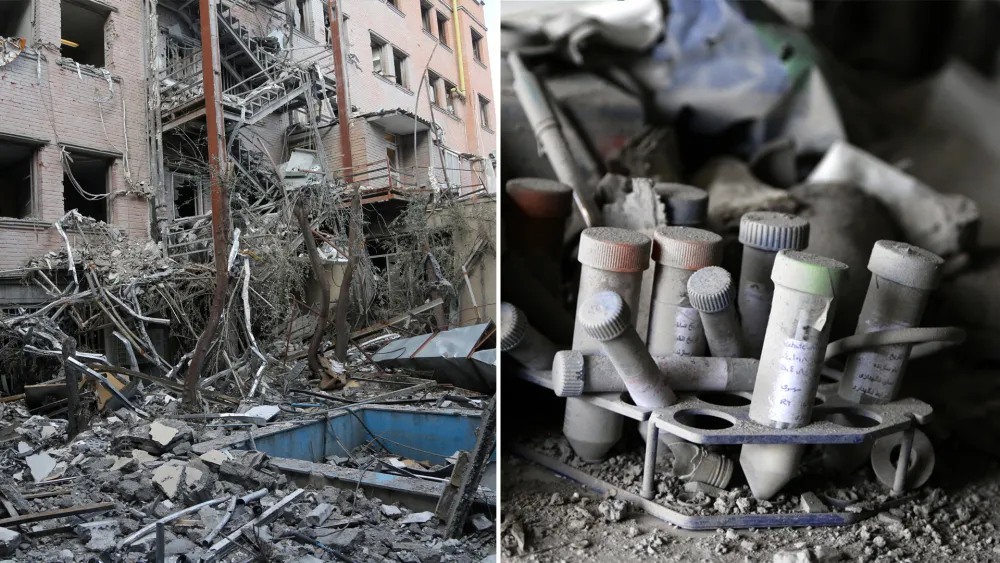
On 2 April, the United States and Israel bombed the 106-year-old Pasteur Institute, targeting one of Iran’s oldest and most critical public health institutions. Established in 1920, the institute has long been central to vaccine production, infectious disease surveillance, and epidemiological research in the Middle East and beyond.
But this wasn’t simply a strike on a building. It was much larger than any single incident. It was a brazen attack on the infrastructure that sustains Iran’s public health. And it reflects a broader pattern in modern warfare, where the target is no longer just people, but the systems that keep them alive.
Disease has long been weaponised in war.
In 1346, during the Siege of Caffa, Mongol forces reportedly catapulted plague-infected corpses into a besieged city, turning epidemic disease into a siege tactic. Centuries later, in 1763, during the Fort Pitt smallpox incident, British officers are documented to have distributed blankets from a smallpox infirmary to Native American emissaries, an act widely interpreted by historians as an early attempt to wield disease as a weapon in a bid to wipe out entire populations. By the 20th century, this pattern became industrial. Between 1932 and 1945, the Japanese Unit 731 conducted large-scale experiments and deployed pathogens against civilian populations in China, transforming disease into an instrument of warfare.
Parallel efforts emerged elsewhere: The British government conducted secret biological warfare tests on Gruinard Island (1942–43); the United States developed its offensive biological weapons programme at Fort Detrick (1943–69), and the Soviet biological weapons programme (1928–91) expanded its capacity to produce massive quantities of weaponised agents.