
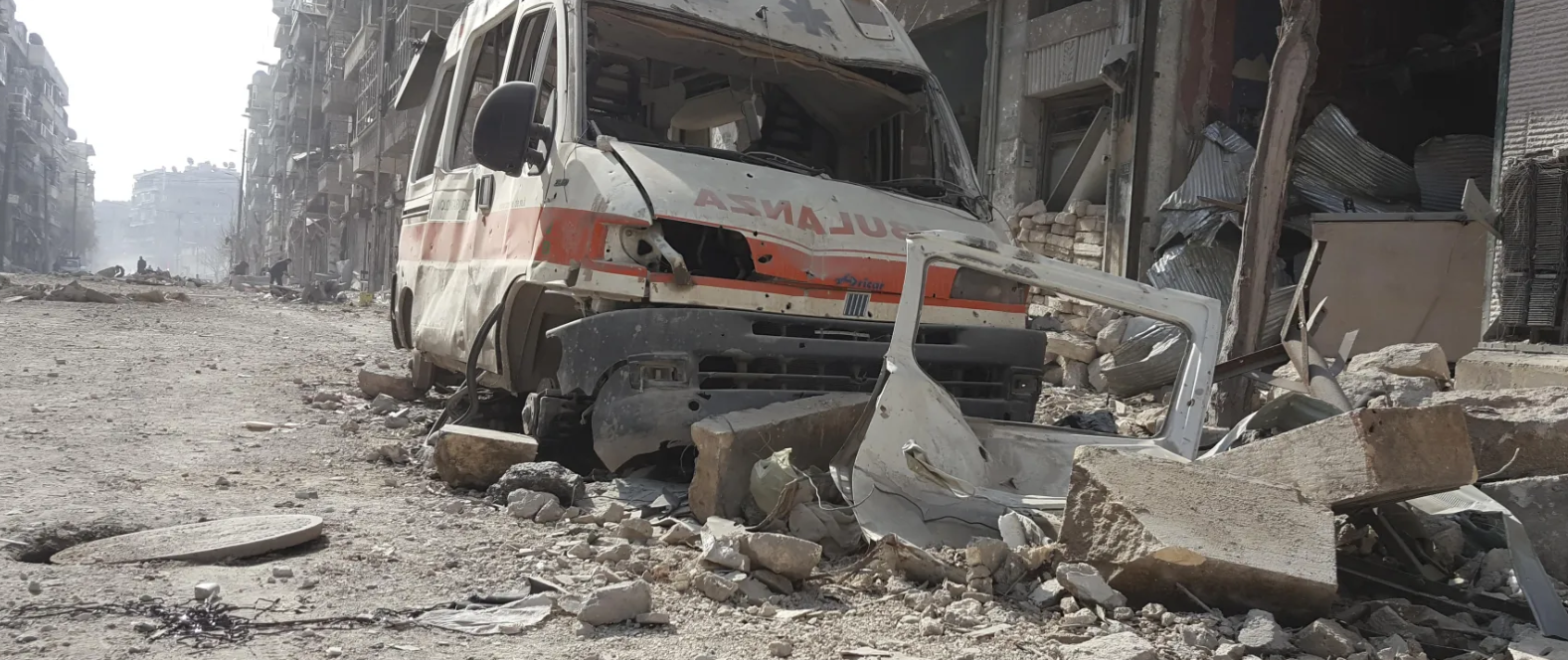
Every time Ashraf Al-Khatib, a paramedic with the Palestine Red Crescent Society, leaves for work, his family says goodbye as though they may not see him again. "Every time we return home," he says, "our families welcome us as if we had returned from the dead."
That sentence - quietly devastating, delivered without ceremony - captures something that no policy document can fully express. Across conflict zones around the world, health workers are making that same calculation every day: the danger is real, and they are going to work anyway.
On 3 May 2016, the United Nations Security Council adopted Resolution 2286, condemning attacks on medical facilities, personnel and transport in armed conflict. It reaffirmed what international humanitarian law already makes clear: hospitals, patients, doctors and ambulances must never be targets. Ten years later, that principle is still being violated - and with devastating consequences.
Ashraf has thought carefully about fear - what it means, what it costs, and what it demands of him.
"The chances of us returning home and the chances of us not returning are equal," he says. "Every time we go out to work we say goodbye to our families."
While the weight of this is clear, he also refuses to let it be the final word. "Feeling fear is not a flaw. Everyone feels fear. But courage is overcoming your fear and controlling it. Our courage lies in not letting fear control us."