
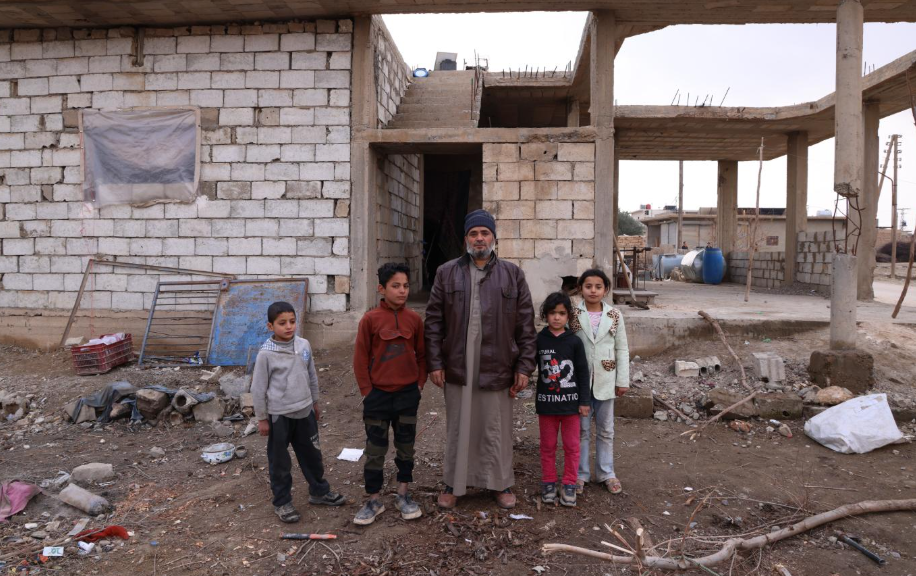
After years of displacement, families are slowly returning to Al-Tibni, a town in Deir-ez-Zor countryside in northeast Syria. Surrounded by dozens of villages across a wide agricultural region, Al-Tibni is home to tens of thousands of residents, many of whom have returned to rebuild their lives.
What they return to, however, is a community where essential services remain limited and healthcare is nearly entirely lacking.
Despite its size, Al-Tibni remains severely underserved. Years of conflict, displacement, and neglect have left health infrastructure damaged, inactive, or poorly equipped.
The nearest hospitals capable of providing specialised or emergency care are up to 45 km away, forcing families to travel long distances at high cost.
Supported by the European Union, Relief International (RI) teams operating a mobile clinic in the area have observed a marked deterioration in health conditions. Communicable diseases are spreading, chronic illnesses are poorly managed, and cases of child malnutrition are increasingly common. These challenges are further exacerbated by: