
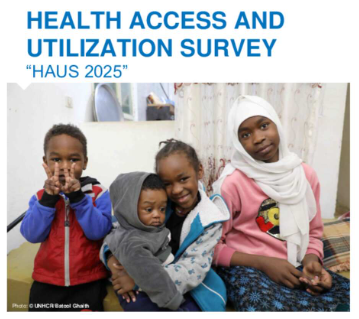
UNHCR has registered a significant refugee population living in Jordan. They come predominantly from Syria, while there are also large groups from Iraq, Yemen, Sudan, and Somalia1. Jordan is currently hosting slightly over to 41,100 non-Syrian refugees, where 26,859 non-Syrian refugees are from Iraq, 9,099 are from Yemen, 4,355 from Sudan, 325 from Somalia and the remainder from other countries. All the non-Syrian refugees are living in host communities in urban and rural areas, with the overwhelming majority living in the capital Amman 2.
In Jordan, a policy change taken by the Jordanian Government to reduce the cost of accessing health care for non-Syrian refugees from the foreigner rate to the non-insured Jordanian rate, brings medical costs down by 65 per cent for some services. the Jordan Health Fund for Refugees (JHFR) supported by the United States, Canada, Italy and Denmark is now directly supporting the Ministry of Health to maintain subsidised access to basic healthcare.
Due to the different nature of access to health care in urban settings, there are a variety of providers including private, public, military, and non for profit. Affordability and quality of care require regular monitoring and evaluation. UNHCR has developed the HAUS in a form of household telephone survey that is simple, flexible and cost-effective to identify factors that may affect refugees’ ability to access and successfully utilize appropriate health services when needed. HAUS allows for measurement of disease prevalence, health status, health expenditure and awareness, and access to key health services in a representative sample of the population. HAUS also pinpoint barriers and facilitators to access and successfully use appropriate health-care services.