
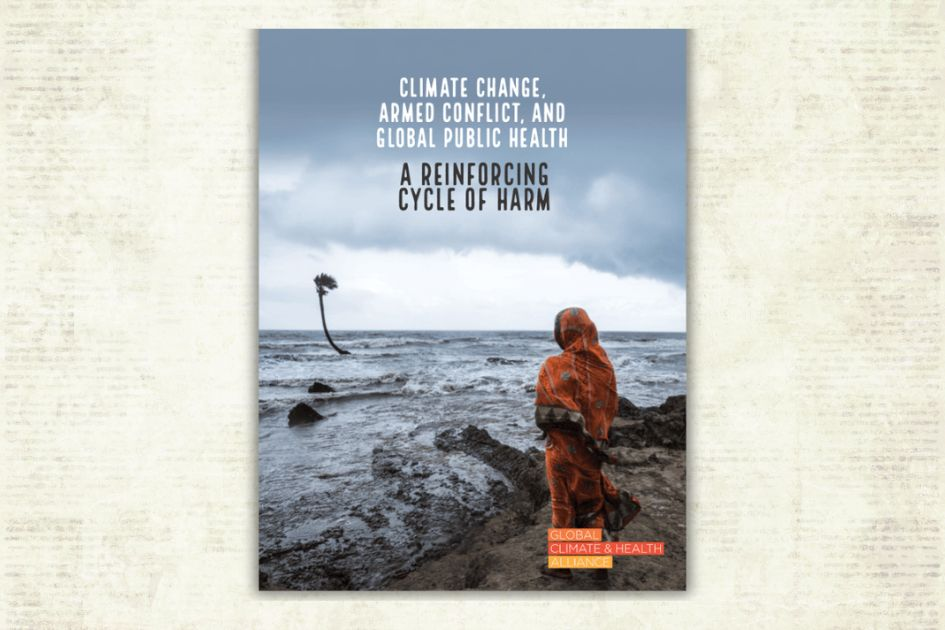
A new global analysis says climate shocks, war and fragile health systems reinforce one another. Fresh monsoon data from Cox’s Bazar shows how that cycle is already straining shelters, clinics and aid budgets in Bangladesh.
An eight-day burst of monsoon weather in July 2026 triggered 482 reported incidents across the Rohingya refugee camps in Cox’s Bazar, affecting about 43,000 people and temporarily displacing 9,707, according to an official inter-agency update. The incidents included 259 wind or storm incidents, 164 landslides and 42 floods.
Between 5 and 12 July, 4,327 shelters were partially damaged and 19 destroyed. The same update recorded damage to 67 water points, 387 latrines and 53 learning centers, a reminder that a weather emergency in a densely populated camp can quickly become a public-health and education crisis.
That Bangladesh evidence gives immediate context to a new report from the Global Climate and Health Alliance (GCHA), which argues that climate change, armed conflict and weak health systems form a reinforcing cycle of harm. The alliance represents more than 200 health organisations across more than 125 countries.
The global report, released in July, does not contain a Bangladesh chapter or a country-level assessment. It includes two photographs from Cox’s Bazar, one of a makeshift medical camp and another of a Rohingya mother and newborn, but its findings are global. The Bangladesh conclusions in this article therefore come from official local data read alongside the report, not from a Bangladesh case study by GCHA.
That distinction matters. It avoids overstating what the report says while showing why its central warning is relevant to a country hosting a population displaced by conflict in neighbouring Myanmar and exposed to repeated cyclones, floods, landslides, heat and disease risks.
Cox’s Bazar: climate exposure meets displacement
UNHCR’s Global Trends 2024 count put the number of forcibly displaced people worldwide at 123.2 million at the end of that year.
Cox’s Bazar hosts more than one million Rohingya refugees in one of the world’s most densely populated humanitarian settings. The 2026 Joint Response Plan seeks $710.5 million to assist up to 1.6 million people, including Rohingya refugees in Cox’s Bazar and on Bhasan Char and Bangladeshi host communities in Ukhiya and Teknaf. Its 98 partners include 49 national Bangladeshi organisations.