
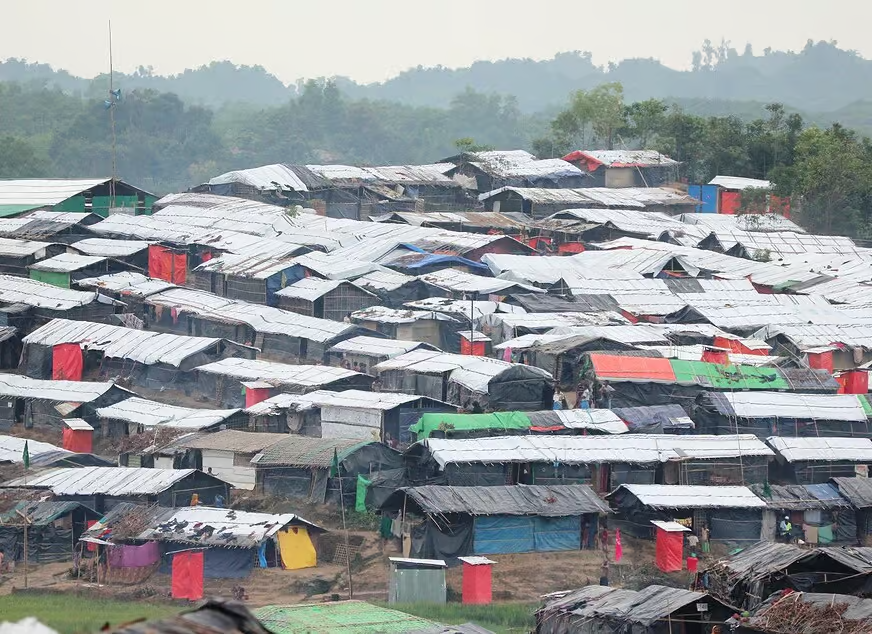
In Cox’s Bazar, Bangladesh, funding cuts are no longer only a planning concern. They are changing everyday operational decisions: how much food assistance can be sustained, which health facilities remain fully functional, which shelter improvements are delayed, how many staff members can be retained, and how much community follow-up is realistic when teams are smaller.
The Rohingya response remains one of the largest refugee operations in the world. More than one million Rohingya refugees live in Bangladesh, most of them in Cox’s Bazar, where restrictions on movement and limited access to formal livelihoods leave families heavily dependent on humanitarian assistance. The 2025−26 Joint Response Plan (JRP) required $934.5 million in 2025 to reach 1.48 million people, including Rohingya refugees in Cox’s Bazar and Bhasan Char, and affected Bangladeshi host communities. The same plan brought together 113 partners, about half of them national organisations from Bangladesh.
By the end of 2025, however, the response was still less than half funded. The official JRP funding update recorded $434.5 million received, or 46% funded by the end of the year. For implementing organisations, that gap is a staffing problem, a service-quality problem, a risk-management problem and, ultimately, a protection problem.
When budgets fall, the effects do not move neatly through one sector. A delayed shelter repair can increase fire or monsoon risk. A health facility operating at reduced capacity pushes patients elsewhere. A smaller outreach team means rumours, complaints and exclusion risks are detected later. Reduced staffing and remuneration packages pass the funding gap onto the people expected to keep services running.
The Cox’s Bazar response is being pushed from a broad coverage model toward a prioritised minimum-service model. The Flash Appeal and Urgent Priorities exercise made this shift explicit: $455.6 million was identified for first-priority activities as part of an essential minimum package, and approximately 49% of the original JRP appeal was required for critical, life-saving interventions.
This kind of prioritisation is necessary under funding pressure, but it is not neutral. Once life-saving activities are protected, other functions become easier to cut: prevention, community engagement, case follow-up, staff supervision, training, maintenance and feedback systems. In a protracted camp setting, these functions may look secondary on paper, but they are often what keep services safe, trusted and usable.
The key operational question is therefore not simply what gets cut. It is whether the response can make trade-offs visible, explain them to communities, monitor their consequences and adjust before small reductions become major protection risks.
Food assistance shows how funding pressure changes programme design and community relations. In April 2026, the World Food Programme began its needs-based targeting for food aid in the Rohingya camps, affecting 1.2 million refugees. Under this approach, households receive different transfer values according to assessed levels of food insecurity.