
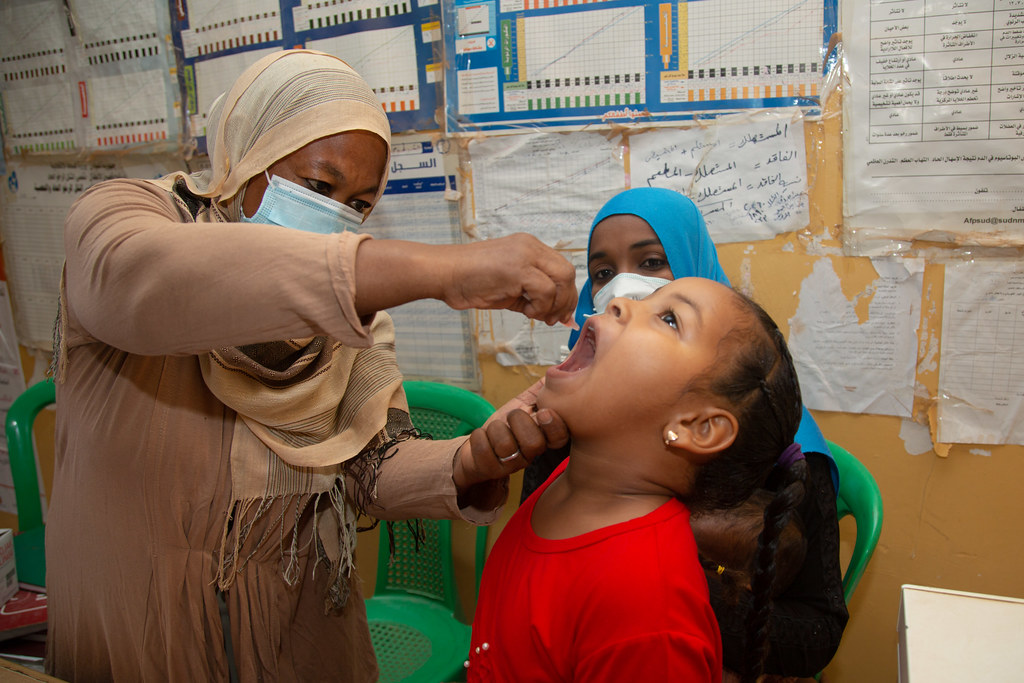
At the Seventy-third session of the World Health Organization (WHO) Regional Committee for the Eastern Mediterranean (RC73), held from 13 to 15 October 2026 in Cairo, health ministers and partners demonstrated strong regional commitment to ending polio and to building stronger immunization systems that protect every child.
Discussions highlighted how sustained political leadership, stronger immunization systems and regional cooperation are essential to finish polio eradication and to protect more children from vaccine-preventable diseases, particularly at a time of decreased humanitarian funding.
Opening RC73, WHO’s Officer-in-Charge Dr Adham Ismail committed WHO to protecting health delivery in the Eastern Mediterranean despite a 14% budget cut.
“We have strengthened key performance indicators and programme governance, created greater budget space through prioritization and worked to protect continuity in priority programmes, including polio, health emergencies and universal health coverage, despite severe humanitarian and financial constraints,” he said.
At its 15th meeting, the Regional Subcommittee for Polio Eradication and Outbreaks reviewed progress towards eradication and the challenges that remain.
Afghanistan and Pakistan remain the only two countries in which wild poliovirus is endemic, with transmission concentrated in high-risk areas, particularly southern Afghanistan and southern Khyber Pakhtunkhwa in Pakistan. Circulating variant poliovirus also continues to pose a threat in parts of the Region, including in Somalia, Sudan and Yemen.
This is the backdrop against which Member States reaffirmed their shared commitment to ending polio, recognizing that progress depends on sustained political commitment, stronger surveillance, high-quality vaccination campaigns and efforts to reach children in the most challenging settings. Countries – including Kuwait, Oman, Qatar, Saudi Arabia and the United Arab Emirates – continue to play important roles through political leadership, technical cooperation and financial support, reinforcing the Region’s collective commitment to ending polio.