
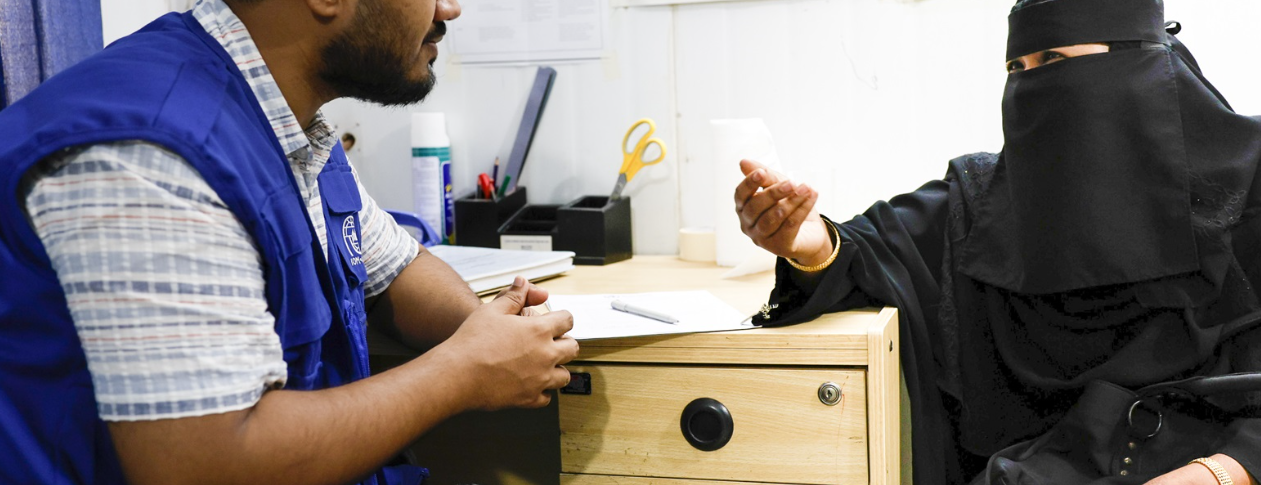
After several visits to a primary health care (PHC) facility in the Rohingya refugee camps in Cox’s Bazar, 38-year-old Jamnat Ara* still did not know what was wrong.
She experienced persistent fatigue, headaches, sleeplessness and sudden episodes of anger, making it difficult for her to care for her family and manage daily activities. Each symptom was treated separately, with no clear explanation of what connected them.
“I kept going back, but I didn’t understand what was happening to me,” she said. “I thought it was just tiredness from daily life, but it didn’t go away.”
Jamnat’s experience reflects a broader challenge in humanitarian settings: Physical symptoms and psychological distress often overlap, yet care is often delivered separately, limiting effective diagnosis and treatment. This means that people living with noncommunicable diseases (NCDs) – who are at greater risk of developing mental health conditions – too often experience delayed diagnosis and incomplete care, leading to poorer physical and mental health outcomes.
In Cox’s Bazar, home to more than one million Rohingya refugees, the scale and complexity of health needs require coordinated services. Since the beginning of the crisis, Public Health Needs Assessments (PHNA) have consistently highlighted the magnitude of the challenge, with the latest PHNA (2025—2026) finding that around one in ten households has at least one member living with a mental health condition.
In response, the Government of Bangladesh, with technical leadership from WHO and support from the European Union Civil Protection and Humanitarian Aid Operations (ECHO), has been integrating mental health and NCD services through the revised Minimum Service Package, moving beyond fragmented treatment to more coordinated and comprehensive care.