
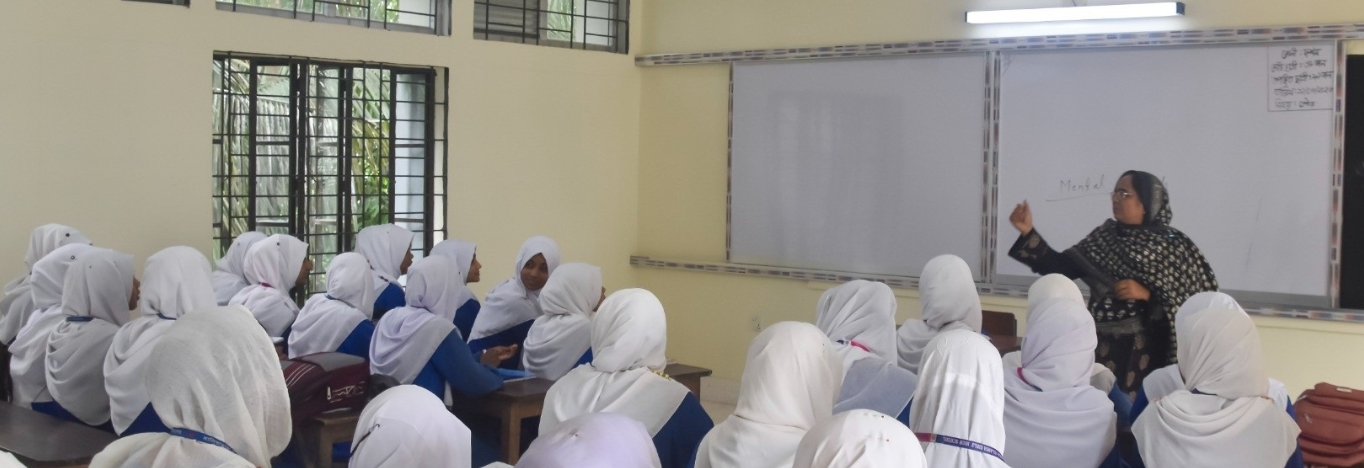
Every morning, Amina*, a grade 10 student at Baliadanga Islamic Girls’ High School in Chapainawabganj District, Rajshahi Division, walked to school carrying worries she rarely shared. Like many adolescents in her community, she struggled with pressures she felt unable to explain. She believed she simply had to endure them, and that having mental health problems meant someone was "crazy". Asking for help never seemed like an option.
Today, her story is different. “I learned that I should not simply be scared,” Amina says. “I need to speak out. Now my friends and I share our feelings, and we also talk to our teachers.”
Her school is one of several participating in the pilot implementation of WHO's LIVE LIFE framework for suicide prevention. For Amina, learning about mental health did more than change her understanding. It gave her the confidence to seek support, and the reassurance that someone would listen.
In Bangladesh, mental health remains one of the most pressing yet least recognized public health challenges. Nearly one in five adults and more than one in 10 children live with a mental disorder. More than 90% of those who need care do not receive treatment.
To address the issue, in 2025 Bangladesh began implementing WHO’s LIVE LIFE framework, which promotes evidence-based approaches to suicide prevention. Key interventions include limiting access to the means of suicide, improving media reporting of suicide, enhancing early identification and support for people at risk, and building stronger national systems for suicide prevention.
For young people, a core component of the LIVE LIFE approach is fostering Socio-Emotional Life Skills (SEL). To facilitate this, in four districts with high numbers of suicides and suicide attempts – Chapainawabganj, Jashore, Jhenaidah and Sylhet – teachers have been trained to integrate short discussions on mental health into everyday school life. Students learn practical skills to cope with stress, recognize emotional distress and suicidal thoughts, support classmates and know when and where to seek professional help.