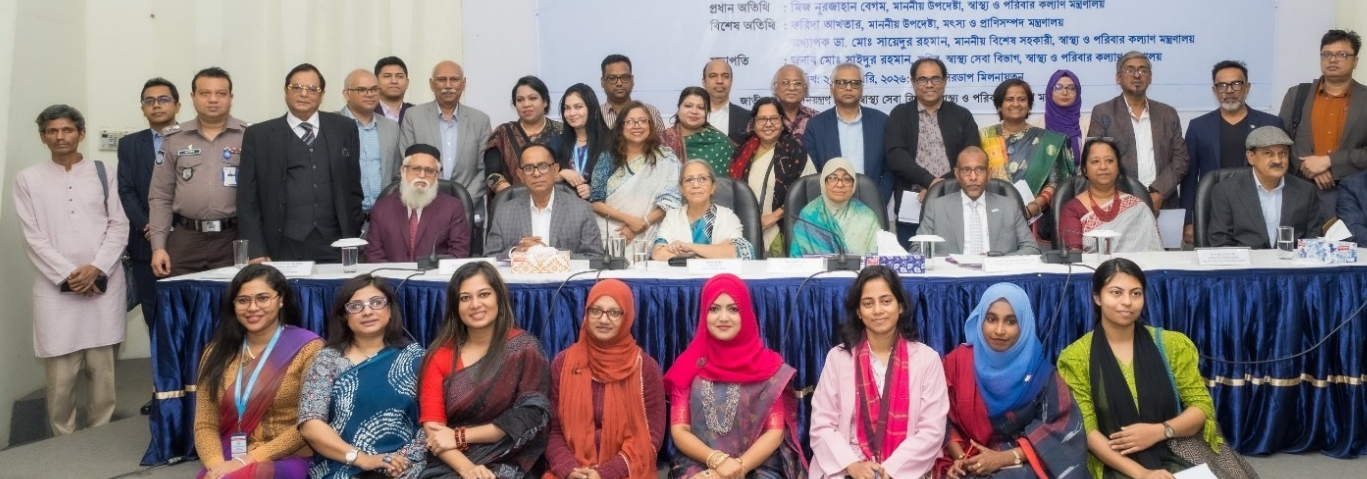
The Government of Bangladesh has taken a significant step forward to protect public health with the approval of the Smoking and Tobacco Products Usage (Control) (Amendment) Ordinance 2025, a landmark reform that strengthens tobacco control measures and advances the country’s vision of a tobacco-free Bangladesh.
Tobacco use is the single most preventable cause of death globally and continues to pose a major public health burden in Bangladesh. According to the Global Adult Tobacco Survey Bangladesh (GATS) 20171, more than one-third of adults (35.3%, approximately 37.8 million people) used tobacco. This includes 18.0% who smoked tobacco and 20.6% who used smokeless tobacco. Tobacco use is also evident among adolescents, as reported in the Global Youth Tobacco Survey Bangladesh (GYTS) 20132, with 6.9% of students aged 13–15 years that used tobacco.
In 2021, tobacco use caused an estimated 130 thousand deaths in Bangladesh, accounting for 21.9% of all deaths. Most of these deaths were due to smoking (79.9%) and second-hand smoke exposure (20.9%)3. Beyond its health impacts, tobacco use significantly undermines Bangladesh’s economy, costing an estimated BDT 305.6 billion in health care and lost productivity in 20184 alone.
These figures highlight the urgent need for strengthened policy measures to reduce tobacco-related illness, disability, and premature death.
WHO has worked closely with the Ministry of Health and Family Welfare (MOHFW) and the National Tobacco Control Cell (NTCC) over recent years to support efforts to reduce tobacco use. This collaboration culminated in the adoption of the amended ordinance, which introduces unprecedented, stronger and more comprehensive tobacco control measures.
WHO support included technical inputs based on global best practices, facilitation of stakeholder consultations, and guidance on adapting international standards to the national context, ensuring that the strengthened legislation meets international public health norms. As a result, the amended ordinance is aligned with the WHO Framework Convention on Tobacco Control (FCTC) and the MPOWER package of evidence-based tobacco control measures, which support countries to Monitor tobacco use, Protect people from tobacco smoke, Offer help to quit , Warn about the dangers of tobacco, Enforce bans on advertising, and Raise taxes on tobacco products.