
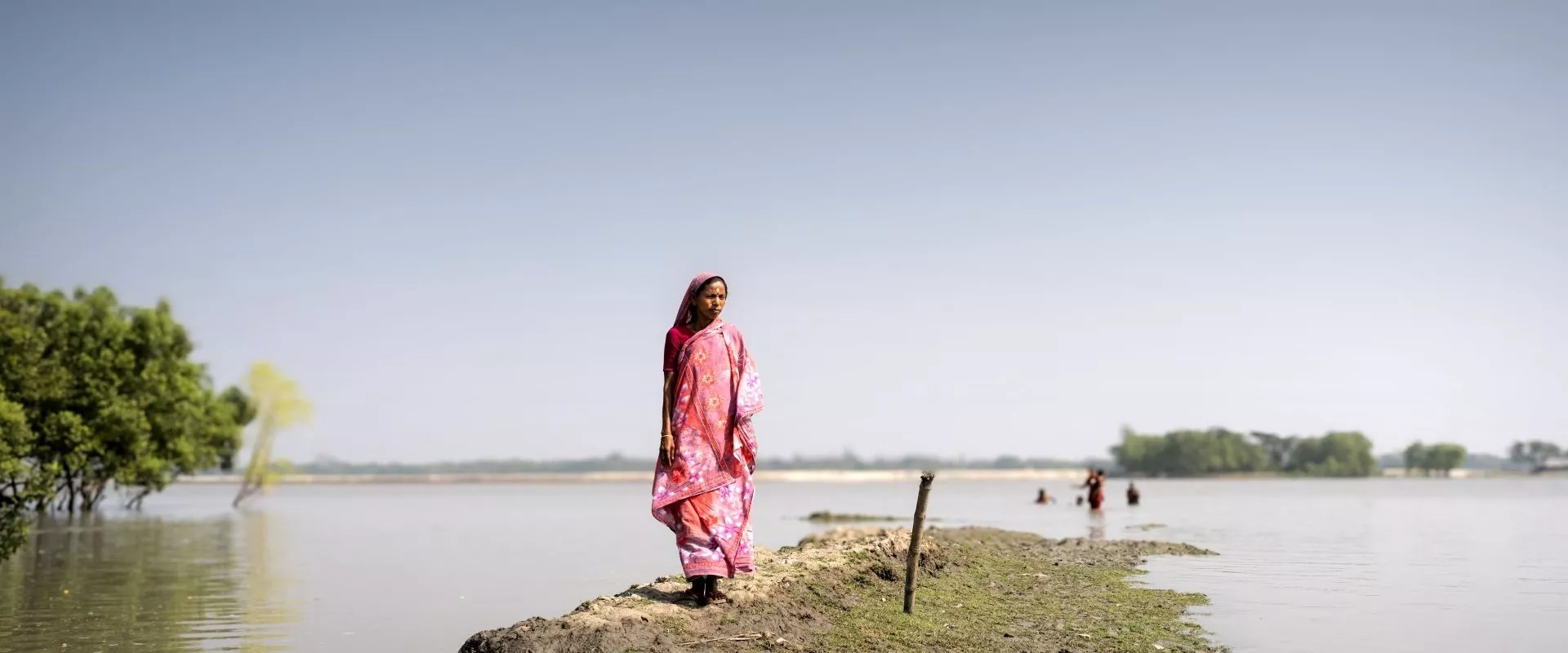
Bangladesh has been repeatedly battered by cyclones, droughts, tidal surges, and floods, with each disaster leaving a deeper mark than the last on both the landscape and the people who live there. Since May 2024, Bangladesh has been severely impacted by four devastating climate-related disasters, including Cyclone Remal, flash floods in the Haor Region, riverine floods in the Jamuna Basin, and unprecedented floods in the eastern regions. These events have had a catastrophic impact, affecting 18.4 million people. In 2022 alone, over 7.1 million Bangladeshis were displaced due to climate change.
Climate disasters in Bangladesh are only expected to worsen. Temperatures are projected to rise rapidly in the coming years, threatening more than 170 million people’s homes, safety, and livelihoods. Action Against Hunger is working to build resilience in Satkhira, a district in the south-west region of Bangladesh where most families rely on agriculture to survive — and are struggling to deal with the nature’s growing unpredictability.
Satkhira borders the Bay of Bengal, one of the most vulnerable areas to increasingly intense and frequent cyclone activity. The region once was thriving with farm fields, but repeated cyclones and tropical storms have mixed saltwater with freshwater, decimating the soil and water sources and making crop farming impossible. The ensuing poverty and food insecurity have forced many farmers to leave their fields. Those who remain struggle with increasing economic and livelihood challenges, as crop yields and availability of arable land dwindle.
Khaleda Hossain Moon, an Action Against Hunger expert based in the coastal area of Satkhira, raises awareness about the risks created by changing weather patterns in Bangladesh stating, “Due to the high salinity of the soil, crop production is very low, and people with low incomes cannot afford to buy food. Thus, many suffer from malnutrition, especially small children.” With no other choice, farmers have abandoned rice cultivation. Men often work as day laborers, leaving their homes for months at a time to find work. At home, women have turned to fish farming to survive, but they frequently suffer from health problems caused by prolonged exposure to highly salty water.