
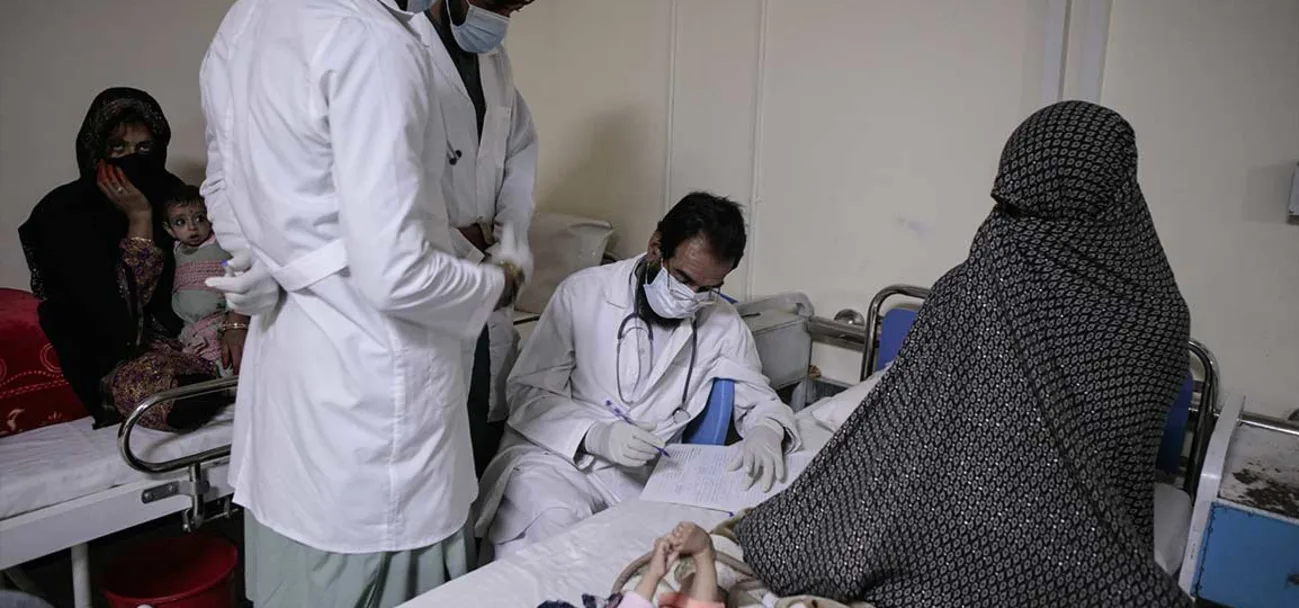
As humanitarian needs remain critical in Afghanistan, with nearly 22 million people requiring assistance, Action Against Hunger faces an alarming rise in the caseload in its health and nutrition facilities and warns that malnutrition continues to pose a severe threat, particularly for children.
Low awareness of malnutrition, delayed treatment, and limited access to essential services are increasing the risk of severe complications, while chronic funding shortfalls threaten the continuity of life-saving assistance and limit efforts to prevent malnutrition before children require treatment.
Since the start of the year, Afghanistan has been hit by a succession of climate-related shocks, from a severe winter to worsening drought and water shortages, deepening vulnerabilities in remote and rural areas. In affected communities, the lack of water for irrigation has contributed to crop losses and declining food security, leaving some families with no choice but to abandon their homes in search of livelihoods and basic necessities.
In June 2026, the Therapeutic Feeding Unit in Kabul (TFU) recorded 142 new admissions, a 149% increase compared to the same period in 2025. Similar trends have been recorded in all other provinces where Action Against Hunger operates, forcing health facilities to expand their capacity to respond to growing needs. In Lashkar Gah, Helmand province, a sharp rise in cases prompted the TFU to increase its bed capacity from 45 to 72 and then again to 118, within just a few weeks time.
Behind these figures are families struggling to break free from a cycle of poverty and recurring malnutrition. At the TFU in Charsada, Ghor province, a five-month-old child has been admitted for malnutrition treatment for the third time in his short life. Like many families in Ghor, his family depends on subsistence agriculture for both food and income. Recurrent drought and other climate shocks have repeatedly reduced harvests and income. As a result, children discharged from treatment often return to households that still lack the resources to provide the nutritious food they need to recover and grow.