
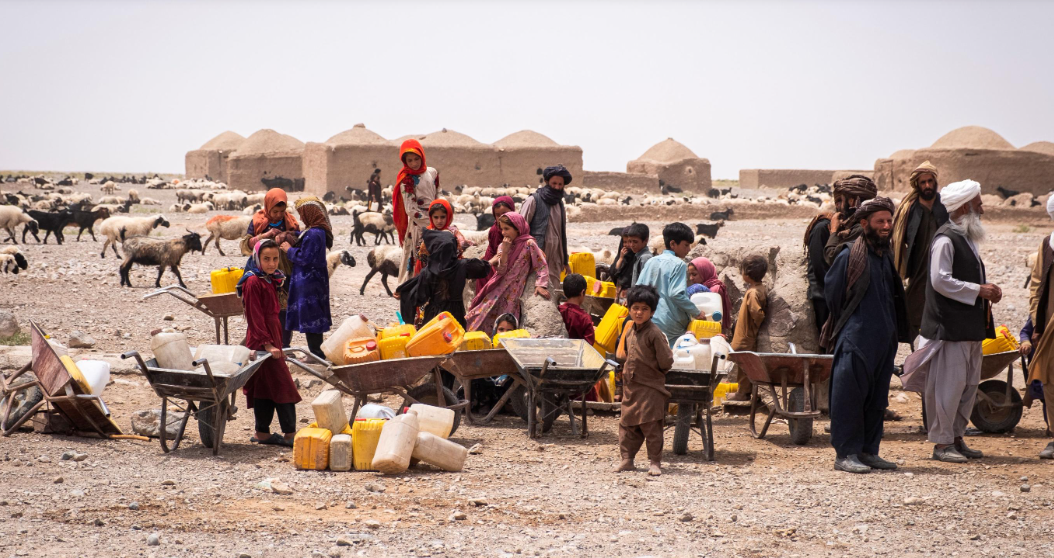
As Afghanistan marks World Environment Day, communities across the country are grappling with intensifying climate and environmental challenges that are increasingly affecting livelihoods, food security, and stability.
Drought and water scarcity remain the most widespread threats. More than half of the population is affected, with prolonged dry periods severely impacting agriculture, the backbone of rural livelihoods.
In eastern provinces such as Nangarhar, farmers report repeated crop failures, while shrinking water resources are fueling competition over land and water.
“Our river has become unpredictable. Last year, it dried when we needed it most; this year it flooded and destroyed half of our crops,” a farmer in Goshta District said, describing the growing uncertainty facing rural communities.
In the southern provinces of Kandahar, Helmand, Nimroz, Zabul and Uruzgan, the situation is particularly severe. Recurrent drought, declining rainfall, and unregulated groundwater extraction have pushed water systems to the brink. Rivers are drying up, traditional irrigation systems have collapsed, and many communities are forced to drill increasingly deep wells, often without success.
The consequences are urgent and far-reaching. Agricultural output is declining, access to safe drinking water is shrinking, and families are being displaced in search of water. Rising competition over limited resources is also increasing tensions. While solutions exist, including water-efficient irrigation, improved water management, and recharge systems, these require rapid and coordinated implementation. Without immediate action, experts warn that parts of the region could become uninhabitable.
In the western region, communities face a different but equally severe challenge. While provinces such as Ghor and Farah experience prolonged drought, others are hit by heavy rainfall and flash floods that destroy homes, farmland, and infrastructure. Communities must cope with water shortages while simultaneously rebuilding what floods have swept away.
Elsewhere, extreme weather continues to intensify. Flooding is becoming more frequent and unpredictable in central and eastern provinces such as Logar, Parwan and Kapisa, while strong winds and dust storms in the south damage crops and contribute to respiratory health problems. Together, these overlapping hazards are driving displacement and increasing humanitarian needs.