
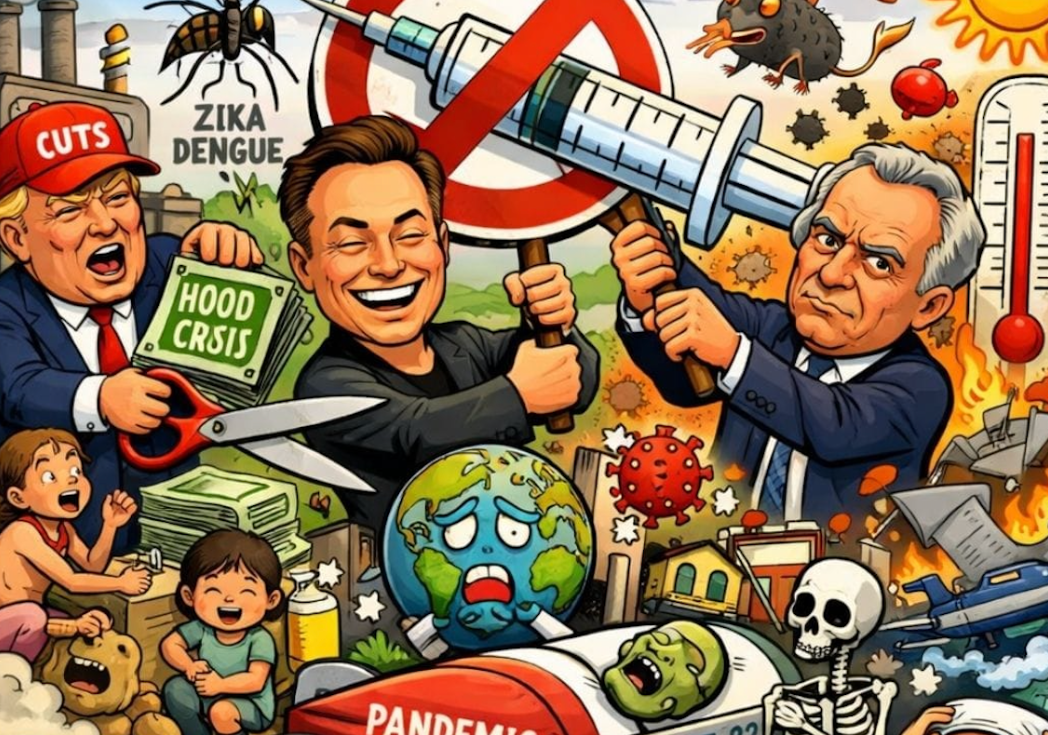
This has been a brutal year for global health, with shock cuts in development aid to countries most in need; a knock-on budget crisis for United Nations (UN) agencies; widespread humanitarian crises, extensive disease outbreaks, and mounting climate-related health challenges.
Health Policy Watch (HPW) has provided daily coverage of developments, and our reporters were often the first to break news on a range of issues despite our small and under-resourced newsroom.
Chaos followed the immediate “pause” of all development aid from the United States as soon as Donald Trump became president in January.
The “pause” included the US President’s Emergency Plan for AIDS Relief (PEPFAR), which funded three-quarters of HIV and tuberculosis programmes worldwide, including lifesaving antiretroviral medicine to 20.6 million people in 2024.
Within weeks, clinics across Africa closed, and patients were turned away as there was no money for staff or medicine.
Although US Secretary of State Marco Rubio later issued a limited waiver for “lifesaving” programmes, this was narrowly focused and ideological. Influenced by the Heritage Foundation’s view that HIV is a “lifestyle disease”, the Trump administration stopped funding HIV measures aimed at “key populations” most vulnerable to infection – including sex workers and men who have sex with men.
Within two weeks of Trump assuming the presidency, his appointee, Elon Musk and a new Department of Government Efficiency (DOGE) had also dismantled the US Agency for International Development (USAID). Musk declared that “USAID is a criminal organisation. It’s time for it to die.”
USAID was hugely influential, and its closure affected almost every country in the world – from Albania to Zambia.
As USAID had administered 60% of PEPFAR funds, in many instances, there was no one left to provide goods and services for those projects covered by Rubio’s waiver.
Reporting on this issue was led by HPW Deputy Editor Kerry Cullinan.