Northern Syria witnessed a sharp escalation of hostilities in January, triggering a wave of large-scale displacement across Aleppo, Raqqa, Deir Ezzor and Hassakeh governorates – a region already hosting some of the country’s largest camps.
Fighting in densely populated areas has resulted in casualties and disrupted access to essential services such as healthcare, water and electricity. Essential civilian infrastructure including water pumping stations, dams and electricity networks serving millions of people has been put at serious risk.
Thousands of families have fled with little more than the clothes on their backs. Many had already been displaced multiple times, having sought refuge in collective shelters in Raqqa, Tabqa, Aleppo and Hassakeh – only to be uprooted once again. With no designated or sufficient reception sites available, newly displaced people are now scattered across overcrowded schools, informal settlements, abandoned buildings, host communities and public facilities. Some families are even returning to previously affected zones, in northern Aleppo, driven by desperation or lack of suitable alternatives.
“The hardest part isn’t leaving. It’s getting used to leaving again” said one man in his fifties who had returned to Aleppo after a decade of displacement, only to be forced to flee again and seek refuge in Afrin.
In Hassakeh, a mother of four described the harsh reality of displacement: “My children are all sick now. It’s very cold. There’s no electricity here, no fuel, and no way to keep warm.”
Civilians are struggling to survive amid freezing winter temperatures, with severely limited access to water, warmth and healthcare.
Beyond harsh winter conditions, the risk from unexploded ordnance (UXO) remains high – particularly in densely populated residential areas where heavy weaponry was used. As people begin to return to their homes, UXOs will only pose a greater risk that will last well beyond the fighting.
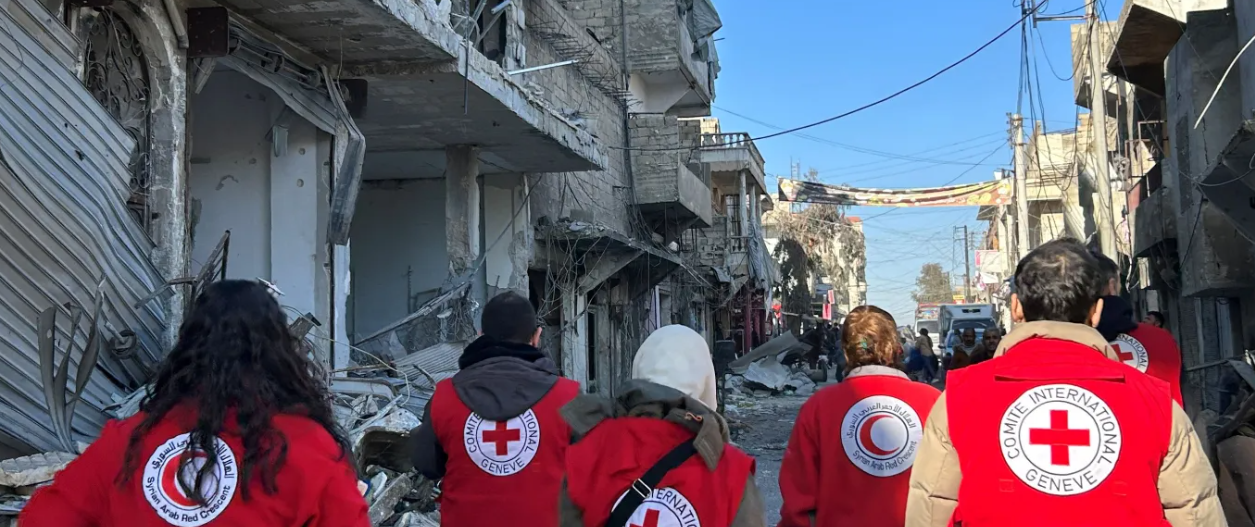
In cooperation with the Syrian Arab Red Crescent (SARC) and in coordination with relevant authorities, the International Committee of the Red Cross (ICRC) has launched an emergency response across four governorates – Aleppo, Hassakeh, Raqqa and Deir Ezzor – to address the most urgent humanitarian needs.