In late 2024, many families in Syria began returning to their hometowns. These were places they had not seen for years during the war. For many, the journey back to towns like Daraya, in rural Damascus, followed years of displacement, when people moved between temporary shelters, overcrowded towns, and informal settlements in search of safety. Returning was rarely a simple decision, but one driven by exhaustion, limited options, and the hope of rebuilding their lives.
People who returned to Daraya found a town that barely resembled the place they once knew. Entire neighbourhoods were reduced to rubble, homes stood open to the sky, walls were blackened by fire, and belongings were long gone. Streets that once bustled with life were now silent, and essential services, like electricity and water systems, no longer worked.
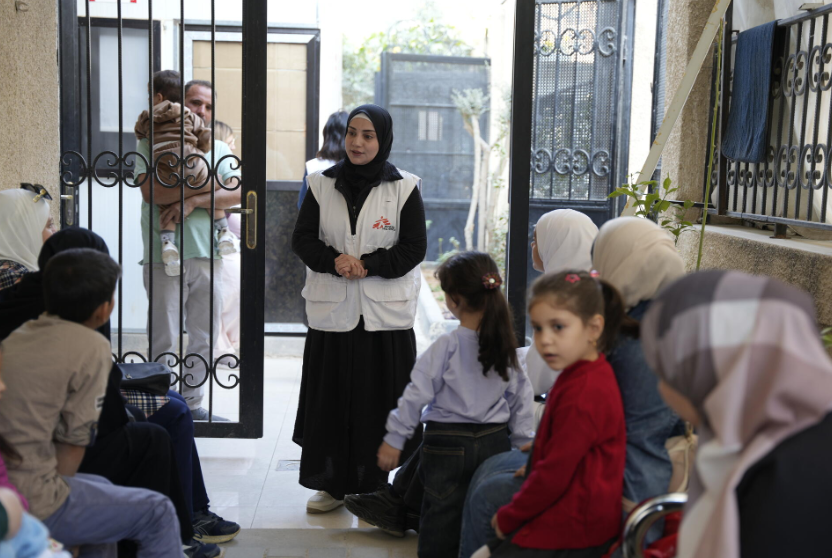
“We came back because there was nowhere else to go,” says Emad, a father waiting for his child’s appointment at Daraya healthcare centre. “But starting over like this is harder than we imagined.”
For families trying to start again, the lack of healthcare was especially alarming. Years of damage and neglect had left medical facilities unusable. After enduring prolonged displacement and interrupted treatment, returning to a town without functioning health services meant facing new risks at a time when resources were already stretched thin.
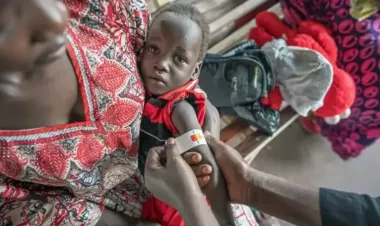
As Daraya once again became reachable, Médecins Sans Frontières (MSF) assessed the needs of returning families. Access to healthcare emerged as a critical priority. Many had gone years without reliable medical care, managing illnesses, pregnancies, and emergencies on their own or travelling long distances for help.
Over eight months, MSF worked closely with the Directorate of Health to restore essential health services in Daraya. The Daraya healthcare centre was rehabilitated, and a fully equipped emergency room was established. MSF provided medical supplies, diagnostic equipment, and staffing, enabling the delivery of comprehensive general healthcare services.
Daraya’s residents now had something they had not seen in a long time: a place close to home where parents could bring a sick child, where someone living with a chronic illness could receive regular care, or where an injured person could receive emergency care. MSF worked to restore this facility between February and December 2025, with donations of supplies continuing into early 2026 to assist the Directorate of Health with continuity of care.