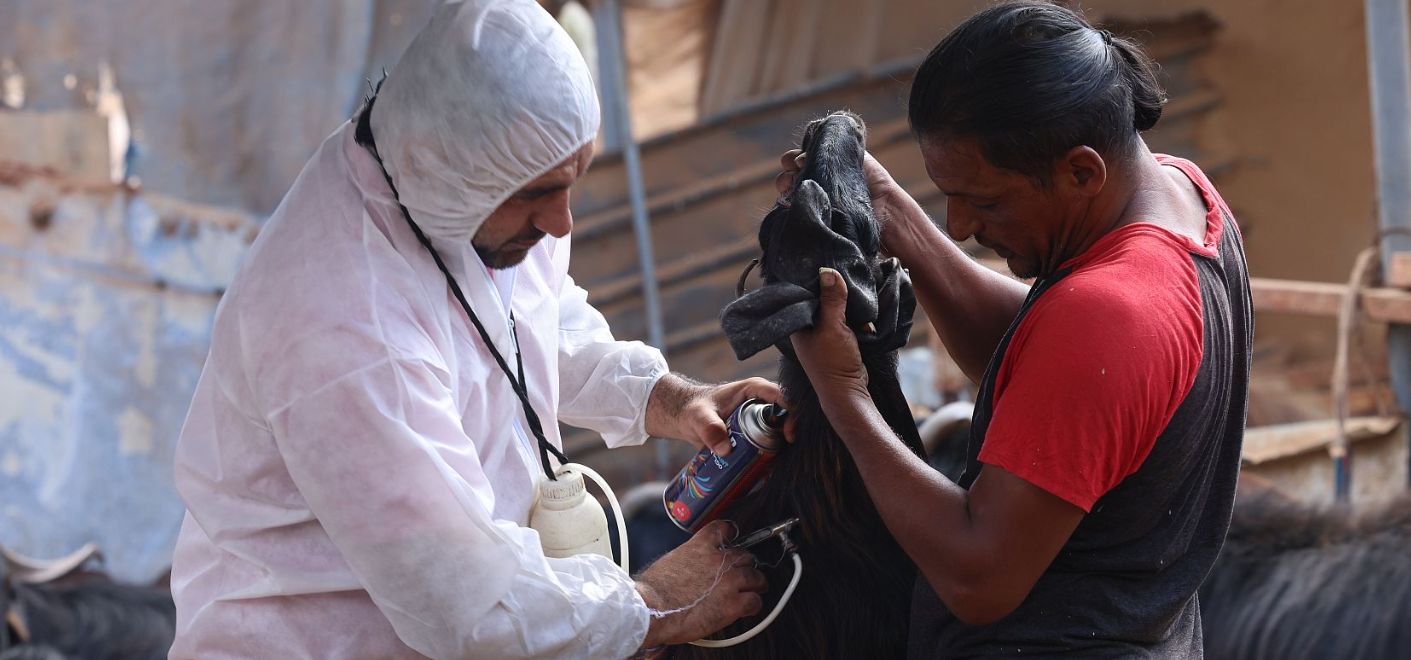
The Food and Agriculture Organization of the United Nations (FAO) and the Ministry of Agriculture have now delivered more than 3.3 million vaccine doses to protect livestock of vulnerable herding families against diseases with high local pandemic potential.
Funded by Italy and Norway, and other resource partners through FAO’s Special Fund for Emergency and Resilience Activities (SFERA), the 3.3 million doses have over the past two years supported immunization of livestock against pest des petits ruminants (PPR), sheep pox, foot-and-mouth disease (FMD) and brucellosis. With financial support from the Pandemic Fund and technical and procurement support from FAO, the Ministry also recently acquired about 50 000 vaccine doses for an emergency campaign against a new strain of foot-and-mouth (FMD-SAT1) in livestock.
"When FAO conducted the 2025 Data in Emergencies survey, agricultural families identified livestock mortality due to disease as a primary reason their household had lost income in recent years. Preliminary findings from FAO's 2026 survey further underscore the growing impact of animal disease, with reports of it as a major production constraint increasing by 20 percent compared with 2025. FAO’s vaccines not only protect livestock but also prevent the collapse of agricultural families’ livelihoods while reducing significant public health risks, all in line with an integrated One Health Approach encompassing animal, public and environmental health in Palestine”, said Dr. Azzam Ayasa Saleh, Head of Programme, FAO West Bank Gaza Strip.
Following a comprehensive assessment in the West Bank, brucellosis, FMD and PPR were identified as three diseases with high pandemic potential in Palestine. The Pandemic Fund project has supported the Ministry to develop prevention, preparedness and response protocols. These include the provision of vaccines, as well as laboratory and testing equipment for identifying outbreaks, standard operating procedures for disease surveillance and response, biosafety and biosecurity tools to protect veterinarians in the field, and databases to facilitate data sharing among public and private veterinarians.