The latest Integrated Food Security Phase Classification (IPC) analysis for Gaza confirms that no areas of the Strip are currently classified in famine following the October ceasefire and improved humanitarian and commercial access. This welcome progress remains extremely fragile as the population continues to struggle with massive infrastructure destruction and collapsed livelihoods and local food production, given restrictions on humanitarian operations.
Without sustained, large-scale expansion of food, livelihood, agriculture and health assistance, together with increased commercial inflows, hundreds of thousands of people could rapidly slip back into famine, the Food and Agriculture Organization of the United Nations (FAO), UNICEF, the World Food Programme (WFP), and the World Health Organization (WHO) warned today.
According to the new IPC report, at least 1.6 million people – or 77 per cent of the population – are still facing high levels of acute food insecurity in the Gaza Strip, including over 100 000 children and 37 000 pregnant and breastfeeding women projected to suffer acute malnutrition through April next year. Four governorates (North Gaza, Gaza Governorate, Deir al-Balah, and Khan Younis) are currently classified in Emergency (IPC Phase 4) through April 2026, with Gaza Governorate downgraded from the previous Famine classification. This phase still indicates severe food insecurity marked by large food consumption gaps, high levels of acute malnutrition, and an elevated risk of mortality.
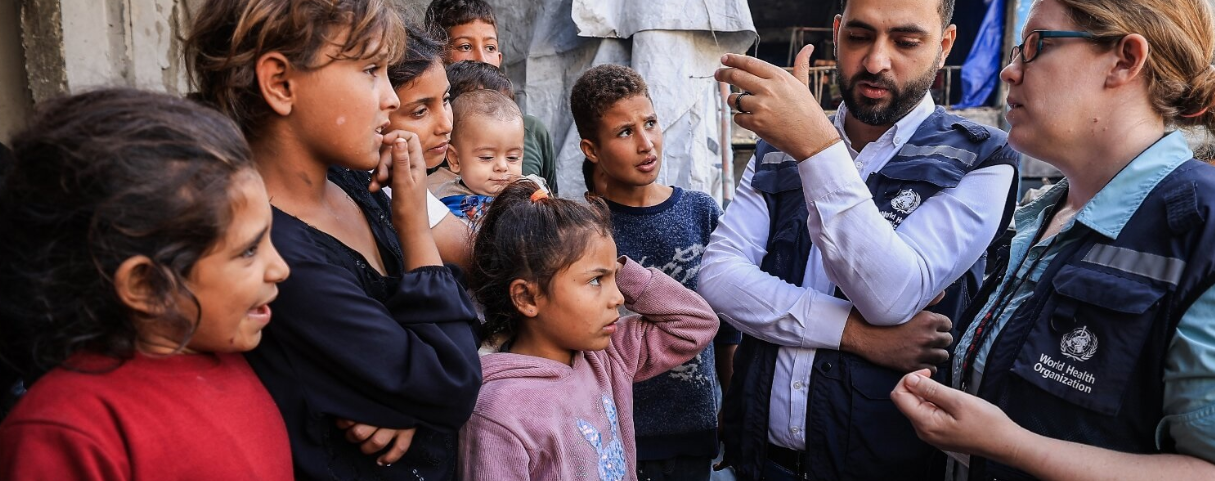
While the ceasefire has improved some deliveries of food, animal feed, basic supplies and essential commercial imports into Gaza, leading to an improvement in access to food for some households, most families are still grappling with severe shortages. Since the ceasefire, more than 730 000 people have been displaced, many living in makeshift shelters and are heavily reliant on humanitarian assistance. In addition, limited access to basic water, sanitation, and hygiene (WASH) services, health care, and the widespread destruction of cropland, livestock, fishing activities, roads and other critical infrastructure pose tremendous challenges for people and for ongoing relief efforts.