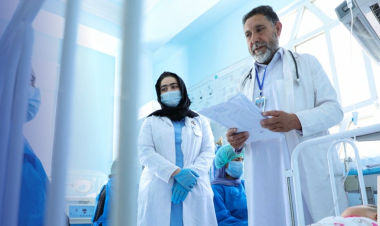
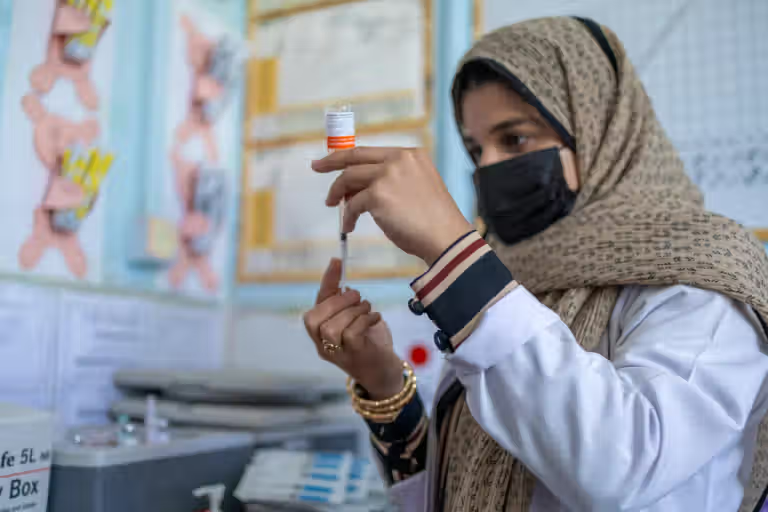
The World Health Organisation has warned that severe restrictions on female staff, unprecedented funding shortages and overlapping crises are seriously disrupting healthcare for Afghan women and children.
According to the organisation’s 2025 annual report, published on Thursday, 30 July, Taliban restrictions on the travel, education and work of female employees severely disrupted community-level health services, disease surveillance and outbreak response.
The report also said a serious shortage of female doctors and health workers, particularly in remote areas, had sharply weakened the quality of healthcare and women’s and children’s access to life-saving services.
Closure of health facilities
A steep decline in funding was another major challenge facing Afghanistan’s health sector in 2025. The humanitarian needs plan received only 45.3 per cent of the required funding.
The shortfall led to the closure of 27 primary healthcare facilities, limiting access to medical services for about 294,000 people.
Overlapping crises strain a fragile health system
Alongside restrictions and funding shortages, earthquakes, drought, floods, disease outbreaks and the return of more than 2.7 million migrants from Iran and Pakistan placed enormous pressure on Afghanistan’s fragile health system.
Providing services and monitoring health conditions in remote and difficult-to-reach areas, particularly during winter, also faced serious obstacles.
Administrative delays and disruption to specialised programmes
The WHO report said lengthy project approval procedures and delays in supplying health and nutrition materials, caused by high transport costs and demurrage charges, slowed the delivery of services.
The ban on methadone also disrupted methadone maintenance treatment services in several provinces.