Afghanistan is facing one of the world’s most severe humanitarian crises. Nearly half the population — an estimated 22.9 million people — require humanitarian assistance to survive. Years of conflict, economic collapse and restrictive policies have strained public services and left the country’s health system struggling to meet overwhelming needs. Maternal and child mortality rates remain among the highest in the world, driven by shortages of qualified health workers and limited access to health facilities, particularly in remote communities.
In response, Islamic Relief USA (IRUSA), in partnership with USA for UNHCR, the UN Refugee Agency, is helping expand access to lifesaving health care for vulnerable Afghan families by equipping eight newly constructed health clinics with essential medical equipment, supplies and furniture. Built on a shared commitment to dignity, compassion and service, this partnership is strengthening Afghanistan’s fragile health system and helping ensure that women, children and persons with disabilities can access the care they need closer to home.
Turning Health Facilities into Lifesaving Centers
For families across Afghanistan, access to nearby health facilities can mean the difference between life and death.
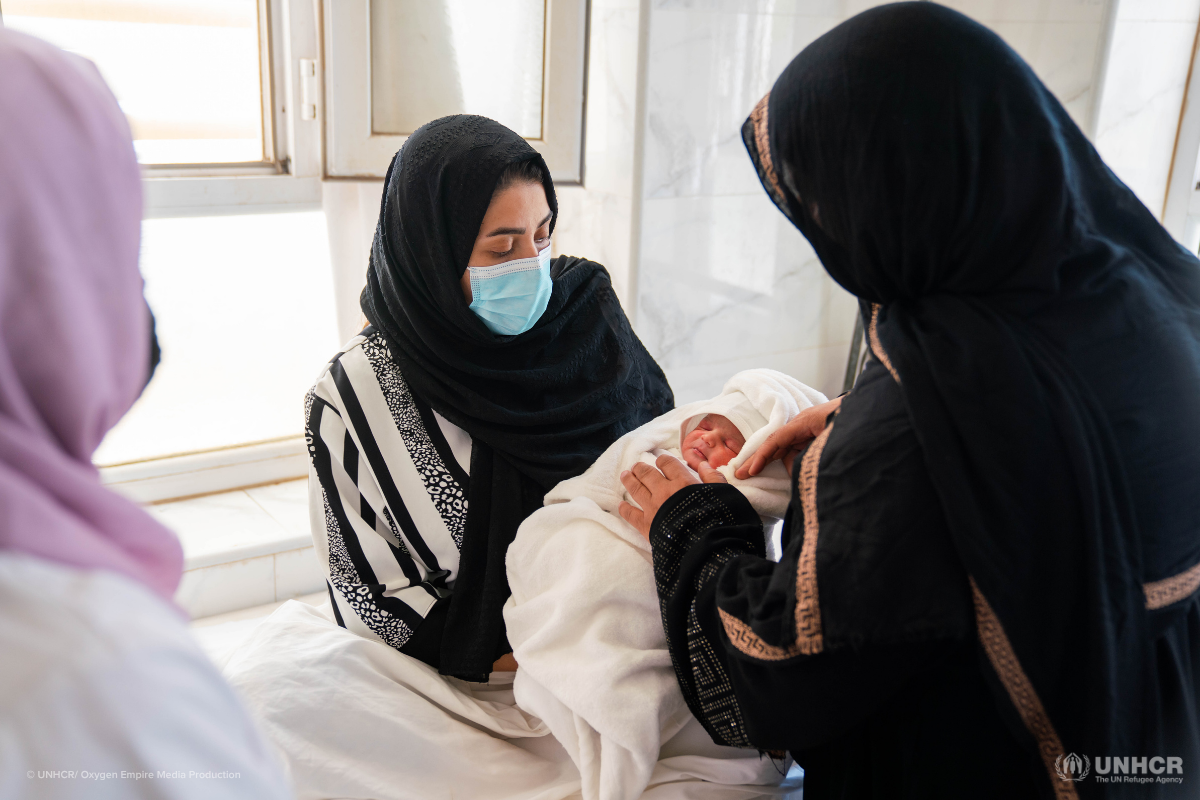
Zahra, pictured above, experienced this firsthand when complications during her pregnancy required a cesarean delivery. She arrived at the Guzara Hospital in western Afghanistan, where doctors performed the operation in a new building constructed with UNHCR support.
The procedure was successful, and both Zahra and her newborn daughter are healthy and preparing to return home.
Reflecting on her experience, Zahra expressed gratitude for the quality of care she received. She highlighted the timely medical attention, regular check-ups and support provided by doctors throughout her stay.
Having returned to Afghanistan from Iran about a year and a half ago, she understands the challenges many returnee families face when trying to access healthcare.