Health has become an increasingly strategic component of international relations. Pandemic preparedness, access to medicines, pharmaceutical supply chains, health data, biotechnology and medical expertise now intersect with questions traditionally associated with sovereignty, economic security and foreign policy. This transformation is particularly consequential in Africa, where health systems remain highly heterogeneous and dependence on imported medical products persists.
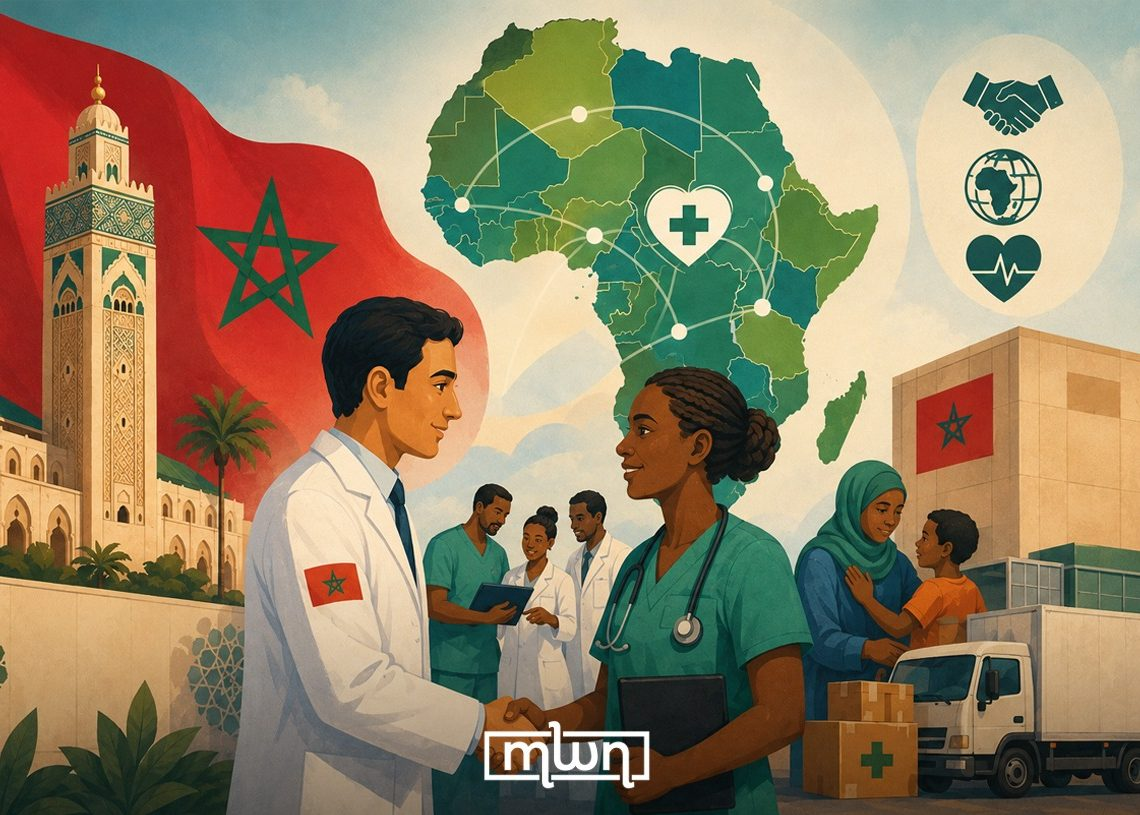
Against this background, Morocco is gradually accumulating assets that could support a distinctive form of health diplomacy. Its domestic health reforms, pharmaceutical industry, emerging vaccine capabilities, medical cooperation and growing investment in digital health offer instruments through which health policy may acquire an external strategic dimension. Yet the relevant question is not whether Morocco can proclaim itself an African health leader. The more rigorous question is whether it can convert these capacities into sustained influence, institutional cooperation, and measurable value for African partners.
This conceptual shift is important. Health diplomacy should not be reduced to humanitarian assistance or medical missions abroad. Health is increasingly understood as an integral component of diplomacy, foreign policy, regional cooperation, crisis communication, data sharing, and global health governance. Its central premise is that recurrent health risks require African states to incorporate health more systematically into interstate relations and regional institutions. This interpretation is particularly relevant after COVID-19.
The pandemic demonstrated that access to vaccines, diagnostic technologies and medical inputs depends not only on clinical capacity but also on industrial location, purchasing power, regulatory institutions, logistics and diplomatic relationships. Consequently, health capabilities can generate strategic value beyond the health sector itself.
For Morocco, this creates both an opportunity and an analytical constraint. Soft power cannot simply be inferred from the existence of hospitals, pharmaceutical factories or international medical initiatives. Influence emerges when external actors consider cooperation with a country valuable, credible and sufficiently durable to shape future preferences and partnerships. Health diplomacy therefore begins with domestic credibility.
Morocco has undertaken one of the most consequential restructurings of its social protection and health architecture in recent years. In March 2025, the World Bank approved a further US$600 million operation supporting human-capital reforms, including the expansion of mandatory health insurance and restructuring of health-service delivery. At that stage, the Bank estimated that approximately 75% of the population was effectively covered, while highlighting remaining difficulties, particularly among non-salaried workers. The supply side has also begun to change.