When Anandita Philipose, the UN Population Fund’s representative in Lebanon, visited a Beirut shelter in the first days of the crisis, she met a woman who was heavily pregnant, days from her due date, displaced, and entirely alone in a system she no longer recognized.
“She didn’t know who to go to,” Philipose recalled. “She came up to me and said: ‘Is there a number I can call?’ I said yes. Here’s our number. Here’s who you can reach. Something as simple as that.”
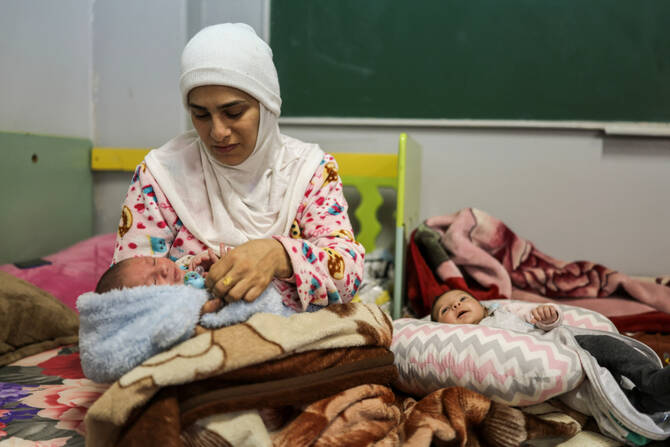
Two weeks later, Philipose returned to the same shelter. She found the woman holding her newborn son, Ali, and his grandmother beaming beside them.
“There was joy in that room,” she said. “Despite the fact that they were still in a shelter, overcrowded, with all the factors we worry about around health and protection — there was joy. That is what keeps our work alive every day.”
The joy, however, is set against a backdrop of ongoing crisis. Speaking to Arab News from Lebanon, Philipose described a situation still defined by uncertainty, danger and acute need — one she says has not improved in recent weeks.
Since March 2, Israeli airstrikes and ground incursions have claimed more than 3,400 lives in Lebanon, forcing more than one million people from their homes — many for the third or fourth time.
On Monday, US-Iran talks in Switzerland produced what mediators described as “encouraging progress,” with the creation of a “de-confliction cell” involving Iran, the US and Lebanese authorities to prevent renewed clashes between Israel and Hezbollah.
The success or failure of the Lebanon mechanism is widely viewed as the first concrete indicator of whether the broader US-Iran diplomatic track can endure.