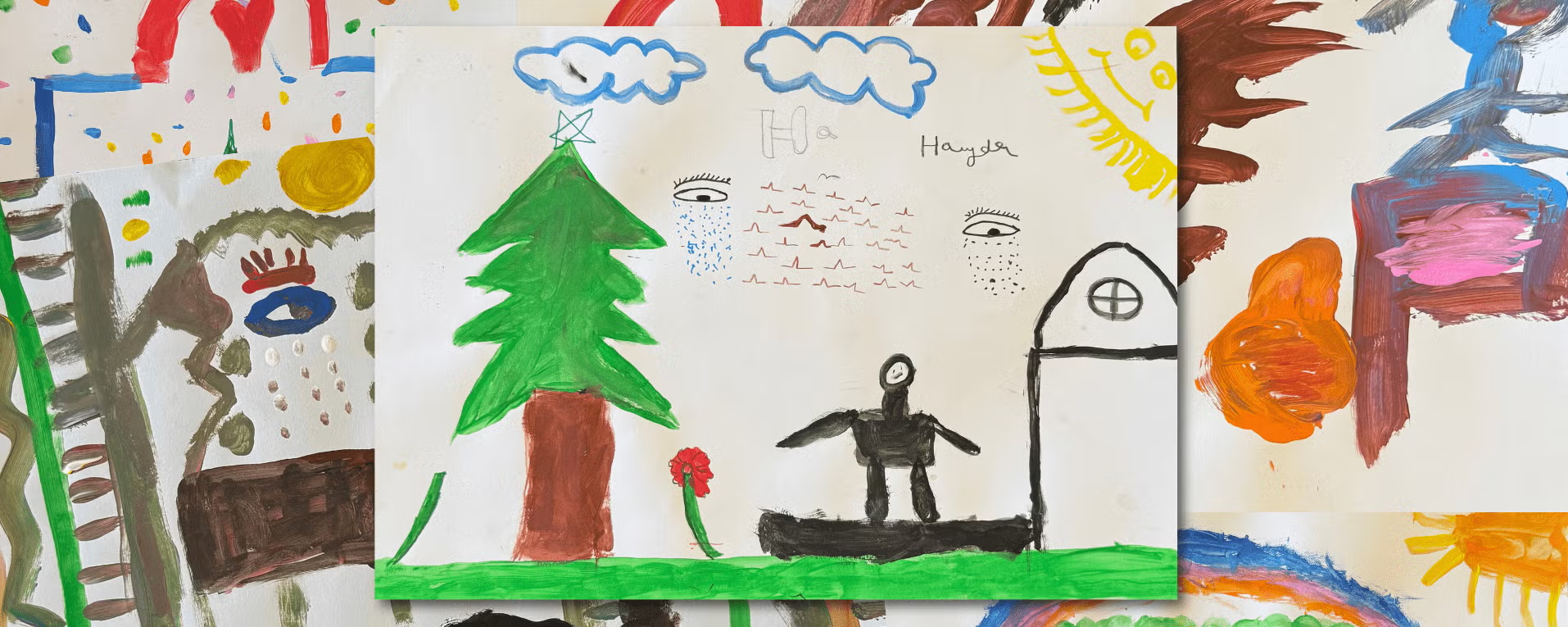
The idea came about unexpectedly during a community discussion in Baalbek-Hermel. As MSF teams spoke with Lebanese and Syrian families about their health needs, a child timidly hovered timidly at the edge of the conversation and asked, “Can we draw? We just want to draw.”
In northeastern Lebanon, children from both refugee and host communities are growing up under immense pressure. Years of conflict in Syria, Lebanon’s economic collapse, ongoing Israeli military operations and airstrikes, and prolonged uncertainty have taken a heavy psychological toll, particularly on children. Sleep disturbances, anxiety, withdrawal, negative behavioral changes, and difficulty concentrating, are a few of the conditions our mental health teams see among children visiting our clinics due to the constant insecurity around them. Many children struggle to articulate fear, grief, and longing, especially in environments where adults themselves are overwhelmed and focused on day-to-day survival and coping.