In July 2024, amid ongoing conflict and widespread displacement in the Gaza Strip, variant poliovirus – with links to poliovirus found in Egypt – was detected in wastewater in Khan Younis and Deir al Balah for the first time in more than 25 years. Poliovirus was then confirmed in a 10-month-old child in Gaza who had never received any vaccines. Immunization had been on hold in Gaza since the conflict began.
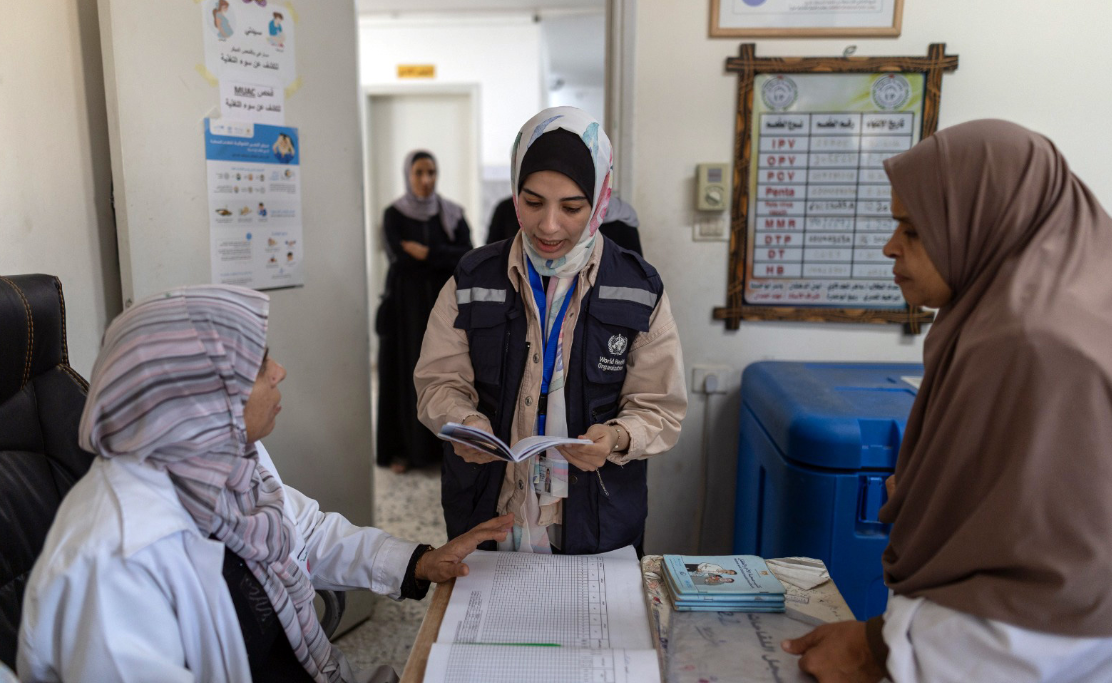
This triggered an urgent public health response. Under the leadership of the Ministry of Health, and with support from WHO and partners, health workers mobilized to vaccinate hundreds of thousands of children against a disease that can cause lifelong paralysis.
Behind this complex operation were countless individuals working under extraordinary conditions, among them 4 women whose leadership, determination and commitment – despite conflict, insecurity and personal loss – helped ensure that children in Gaza received protection against polio.
In October 2023, during the first week of the conflict in the Gaza Strip, Dr Ola El Najjar lost 16 members of her family, including her parents, siblings and their children. Her home was bombed and belongings stolen and she was forced to flee with her husband and 4 young children.
In the face of devastating personal loss, she remained determined to protect children from polio – a preventable disease. When she heard about the polio outbreak Dr Ola was determined to take action, even though this meant leaving her own children at home amid the insecurity.
Destroyed roads and no power or internet were among the challenges she faced as she oversaw vaccination campaigns as a municipal supervisor actively involved in microplanning and coordination with partners. Dr Ola led vaccination activities in Gaza City. Even after the fragile ‘hours of peace’ set aside during the humanitarian pause for vaccination campaigns had ended, she and her colleagues stayed behind to collate data, knowing the journey home could be risky.
Reflecting on why the campaigns were effective, Dr Ola says the presence of women alongside men in the vaccination and social mobilization teams were among the reasons that helped ensure better outreach to mothers and children.