The Directorate General of Health Services (DGHS), with support from the World Health Organization (WHO), has conducted a field assessment across 16 public health facilities in Bangladesh to identify gaps in medicine supply management and strengthen the availability and quality of essential medicines.
Conducted between 13 September and 5 October 2026, the assessment examined the implementation of the electronic Logistics Management Information System (eLMIS), alongside medicine storage, inventory management and pharmacy practices. The findings will inform efforts to strengthen medicine supply chains and support the potential nationwide expansion of eLMIS.
“Access to safe, effective and affordable essential medicines is fundamental to a strong health system and universal health coverage,” said Professor Dr. Foara Tasmim, Additional Director General (Planning and Development), DGHS. “This requires a supply system that can anticipate demand, prevent shortages and respond to the needs of health facilities. The assessment will help us identify where improvements are needed and guide future investments.”
Ensuring a reliable supply of essential medicines remains a significant challenge for public health facilities in Bangladesh. Procurement delays, inaccurate stock records, inadequate storage conditions and shortages of trained personnel can contribute to medicine shortages and wastage, limiting access to treatment and increasing patients’ out-of-pocket costs.
To help address these challenges, Bangladesh has progressively introduced eLMIS since 2021, expanding its use to 84 facilities in nine pilot districts, as well as central supply operations and selected disease programmes. The system is designed to improve the visibility of medicine stocks, support more accurate forecasting and enable health authorities to identify potential shortages before they occur.
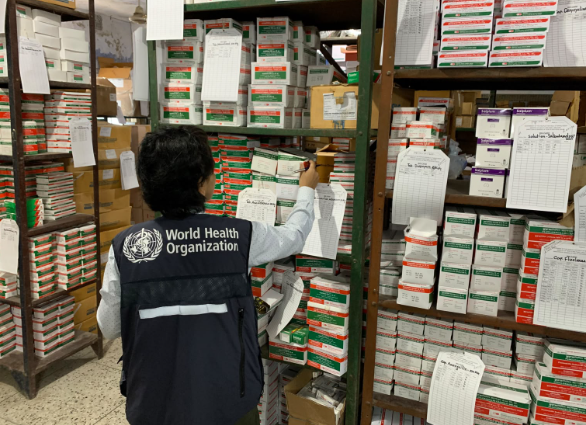
During the assessment, joint DGHS and WHO teams visited district hospitals and upazila health complexes across six districts: Khulna, Sunamganj, Rajshahi, Khagrachari, Bhola and Nilphamari. Using a standardized assessment tool, they reviewed medicine stocks against facility records, examined storage conditions and assessed how health workers use logistics information to manage supplies.