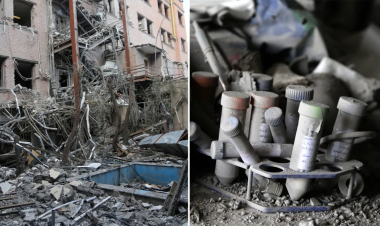
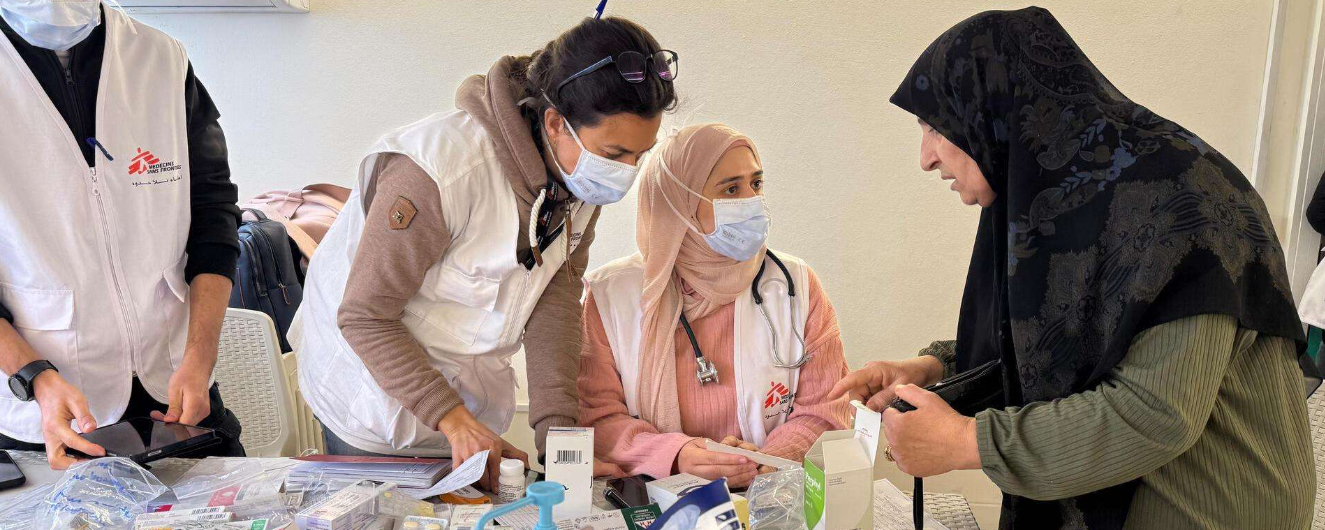
The war in Lebanon is now under a fragile 10-day ceasefire, but it has had a devastating impact on the country’s health care system and staff. Over 46 days of bombardment by Israeli forces, attacks on first responders and hospitals put health care workers at risk and resulted in injuries and deaths. Nevertheless, Lebanese health workers — including Doctors Without Borders/Médecins Sans Frontières (MSF) teams —continued to provide lifesaving care under immense pressure.
During the escalation of conflict, health care staff in southern Lebanon worked around the clock, responding to near-daily influxes of injured and killed people brought to hospitals. Patients, including children, arrived with severe injuries, including heavy bleeding, traumatic amputations, and complex wounds. Health care workers often feared that their family members or friends would arrive among the dead and wounded.
In Nabatiyeh, thousands were forcibly displaced following Israeli forces’ massive bombardment and blanket evacuation orders. Yet many families chose to stay behind, and health care workers remained at their posts to keep lifesaving services running. At the Nabatiyeh Governmental Hospital, around 42 families, including medical staff and their children, sheltered inside the hospital.
“Health care staff in Nabatiyeh’s hospitals slept inside the hospitals for a total of 46 days,” says Tania Hachem, MSF medical program manager. “Some couldn’t go see their families, while others had relatives staying with them in the hospital.”