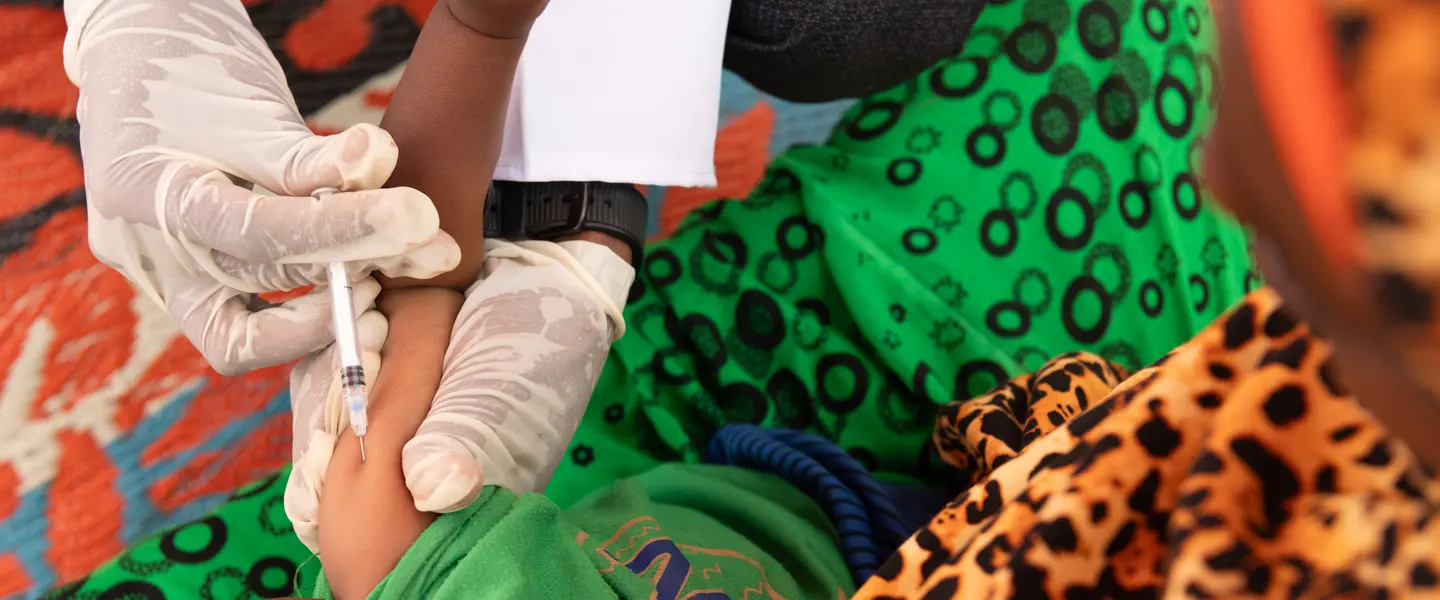
Five deadly diseases for children – cholera, measles, malaria, tuberculosis and diarrhoea - could witness major resurgences in 2026 as aid cuts, the climate crisis and conflict converge to reverse hard-won health gains, said Save the Children.
Global funding for health in low- and middle-income countries is
estimated to have fallen by at least one fifth this year with countries in sub-Saharan Africa suffering most of the heaviest cuts, with health systems in 2026 under even greater pressure to deliver essential health services to children in desperate need with even less resources.
Meanwhile, the number of children living in conflict zones
reached a record high in 2024 at 520 million – or more than one in five [1] – while an estimated 73,000 children per day were affected by climate crises this year [2]. Both of these crises can damage health infrastructure and reduce access to food and essential services, increasing the spread of infectious diseases and children’s susceptibility to them through, for example, increased malnutrition.
Without urgent action from governments and partners around the world, here are five killer diseases for children that could see a surge in 2026.
-
Cholera
Cholera, which spreads via contaminated food and water, could continue its surge in 2026 particularly if the number of children living in conflict zones continues to increase, and extreme weather events disrupt access to safe water and sanitation. Children, which tend to make up a high proportion of people in living in such unstable situations, are particularly at risk.
Both preventable and treatable,
there were at least 581,500 cases and 7,200 fatalities from cholera in 2025. While overall cases were lower than in 2024, deaths have increased in part due to outbreaks in conflict-affected areas and aid cuts which have decreased access to safe water as well as essential health services and forced the closure of thousands of primary health care clinics. The number of people infected also spiked this year in some conflict countries hard-hit by aid cuts such as South Sudan and Democratic Republic of Congo, both of which saw many more cases in 2025 than in 2024.
-
Measles
Measles,
which once killed millions of children, made a deadly comeback in 2024. Cases in 2025, although lower than in 2024, were four times higher than five years ago in 2021, while some regions such as the Americas and Asia Pacific have seen more cases this year than any time in the last five years.
Although the disease can be prevented with two doses of a safe and highly effective vaccine, progress in immunisation rates has stalled with the World Health Organization warning that funding cuts to surveillance and country immunization programmes could
drive even more outbreaks in 2026 . This year Canada lost its measles elimination status amid a rise in cases. Measles however hits hardest in fragile, conflict-inflicted places, such as Somalia which saw a15-fold surge in cases this year as aid cuts have forced the closure of hundreds of health facilities – with
hundreds more at risk.
-
Malaria
Progress has stalled in recent years against malaria. The
WHO has warned that converging threats such as resistance to malaria treatment drugs, funding cuts, extreme weather events and growing humanitarian crises which damage water and sanitation facilities and create breeding grounds for mosquitoes, could lead to a rise in cases without more targeted investment and global action.
While vaccines have provided an important new tool in the fight against malaria, cases have risen each year for the past decade. In 2024 there were an
estimated 282 million new malaria cases and around 610,000 deaths, up from 263 million cases and 597,000 deaths in 2023, with sub-Saharan Africa and children under five bearing the brunt.
-
Diarrhoea
Many cases can be prevented through safe drinking-water and adequate sanitation and hygiene. Rising climate disasters are among the factors that could lead to an increase in cases with
studies suggesting that climate change is responsible for a substantial number of diarrhoea cases, while rising temperatures and unusually drier rainy seasons resulting in increased water insecurity are expected to
increase cases further in South and Southeast Asia.
-
Tuberculosis (TB)
Cuts to international donor funding for TB come on the back of stagnating funding since 2020.
Experts have warned that long-term funding cuts could lead to an additional 8.9 million children under 14 falling sick from TB, and 1.5 million more dying between now and 2034, mostly in Africa and south-east Asia - more than twice the number of children who would have died otherwise.
While TB affects people of all ages, children, especially those younger than 5 years old are more likely to get sick than adults and develop more severe forms of the disease such as TB disease of the brain or TB disease in multiple parts of the body.
Laura Cardinal, Save the Children's senior health lead said:
“Aid cuts, record numbers of children living in countries in conflict, increased hunger and the climate crisis are coming together in a perfect storm that could lead to a surge in killer diseases for children such as cholera, measles and malaria.