The World Health Organization (WHO), with support from the European Union (EU) through the European Civil Protection and Humanitarian Aid Operations (ECHO) and the Government of Japan, has strengthened access to essential health services in Al Qatrun, delivering 6450 medical consultations between 19 July and 30 September 2026.
Inhabitants of Al Qatrun, in the remote Murzuq District near Libya's southern border, face significant challenges in accessing essential health services. Local health facilities serving people in urgent need of health care, including host communities, contend with limited medical infrastructure, shortages of oxygen and essential medicines, limited diagnostic capacity and disruptions to electricity, fuel and transportation.
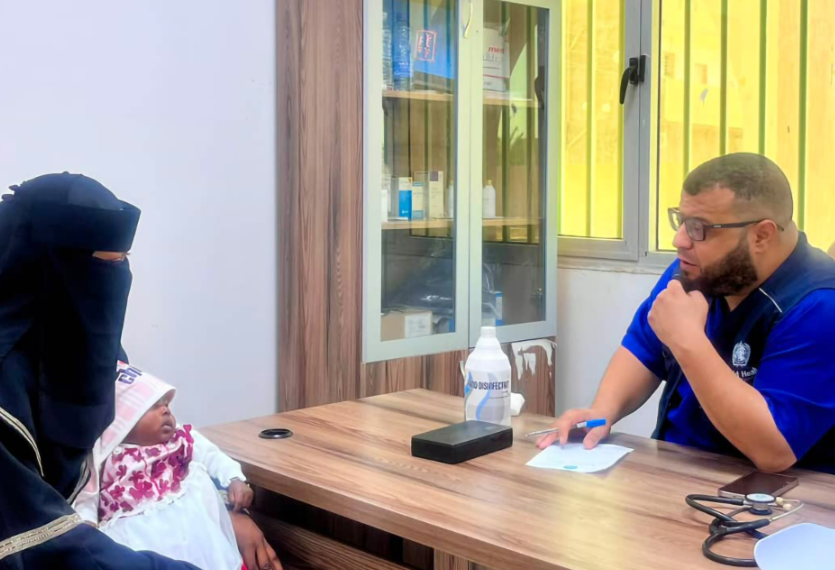
To address these needs, WHO deployed five doctors to Al Qatrun Rural Hospital to strengthen paediatric, emergency medicine, internal medicine and obstetric and gynaecology services. Working alongside local health personnel, the WHO-supported doctors provided an average of 87 consultations a day, helping maintain the continuity of essential health services despite challenging operating conditions.
During the reporting period, the team provided 2775 (43%) of all paediatric consultations, 1395 emergency medicine consultations, including the management of injuries and other urgent medical conditions, 1328 obstetric and gynaecological consultations, supporting women's health and maternal care, and 952 internal medicine consultations, including care for patients with chronic and acute medical conditions.
Children and adolescents represented a substantial proportion of patients, with women and girls accounting for nearly 60% of all consultations. The medical team managed 1065 cases of acute respiratory infections and 688 trauma cases, reflecting the considerable burden of communicable diseases and injuries in the area.
A total of 941 children were screened for malnutrition, of whom 111 were identified with moderate acute malnutrition. Families received nutrition counselling to support improved child health. The team also facilitated 331 medical referrals for patients requiring specialized care, including emergency surgical interventions, neonatal care and management of complicated pregnancies, with many patients transferred to Sabha Medical Centre, 380 km away.