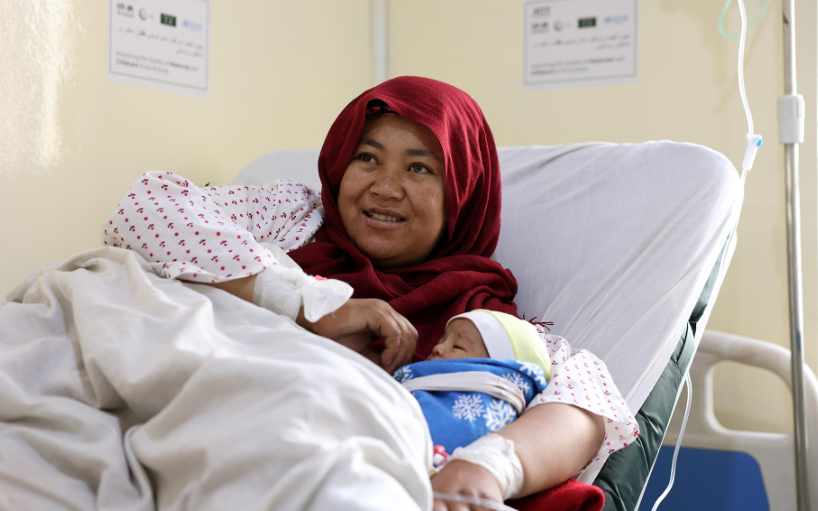
The World Health Organization (WHO), with the generous support of the Islamic Development Bank (IsDB), is expanding essential health services for women and children across Afghanistan, helping more mothers give birth safely and ensuring care for those facing childbirth complications.
While access to care has improved in recent years – antenatal care coverage has increased from 31% to 76% and skilled birth attendance from 24% to 67% since 2007/2008 – many women still face life-threatening risks during pregnancy and childbirth. While child mortality has declined from 129 deaths per 1000 live births in 2000 to 56 in 2023, maternal mortality remains high at 521 deaths per 100 000 live births.
In Afghanistan, 521 mother die in each 100000 life birth from preventable complications such as haemorrhage, hypertension, sepsis and obstructed labour. For many who survive, the consequences can be lifelong. Obstetric fistula, a severe injury caused mainly by prolonged obstructed labour, leads to continuous incontinence, chronic health problems and social stigma. Many women affected are isolated from their families and communities, unable to work and face deep psychological distress.
Despite its devastating impact, fistula remains hidden and under-addressed. Women living with the condition often suffer in silence due to shame, limited access to specialized care and lack of awareness that treatment is possible.
To respond to these pressing needs, WHO and IsDB are strengthening reproductive, maternal, newborn, child and adolescent health services, including training health workers, improving access to quality care and expanding specialized services.
Two specialized obstetric fistula centres have been established, one at Rabia-e-Balkhi National Maternity Hospital in Kabul, the second at Mirwais Regional Hospital in Kandahar. The centres provide surgical repair alongside comprehensive care, including rehabilitation and support for social reintegration. The project is expected to directly benefit 300 fistula survivors and indirectly support around 300 000 women and girls of reproductive age.
In parallel, more than 977 health workers have been trained to improve the quality of maternal and newborn care, helping prevent complications and ensure timely treatment.