
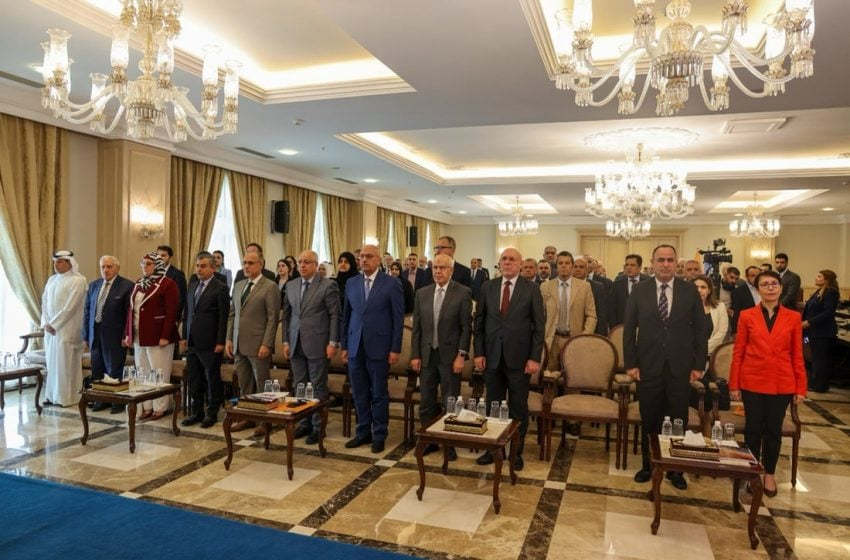
The real population crisis is not one of “too many” or “too few” people, but rather the widespread inability of individuals to have the number of children they desire due to economic, social, and political barriers. This was the central message of the United Nations Population Fund’s (UNFPA) flagship “State of World Population 2025” report, which was officially launched in Baghdad on Monday (July 14, 2025) in partnership with the Iraqi Ministry of Planning.
The event, held on World Population Day and attended by government representatives, diplomats, and civil society, reframed the demographic debate, shifting the focus from numbers to human rights and choices, with significant implications for Iraq.
The report highlights that Iraq’s current fertility rate stands at 3.3 children per woman, and 3.2 in the Kurdistan Region. While this is higher than in many parts of the world, the underlying challenges preventing families from achieving their aspirations are universal. The global report, which surveyed 14,000 people across 14 countries, found that while most people desire two or more children, roughly one in five believe they will be unable to achieve their preferred family size.