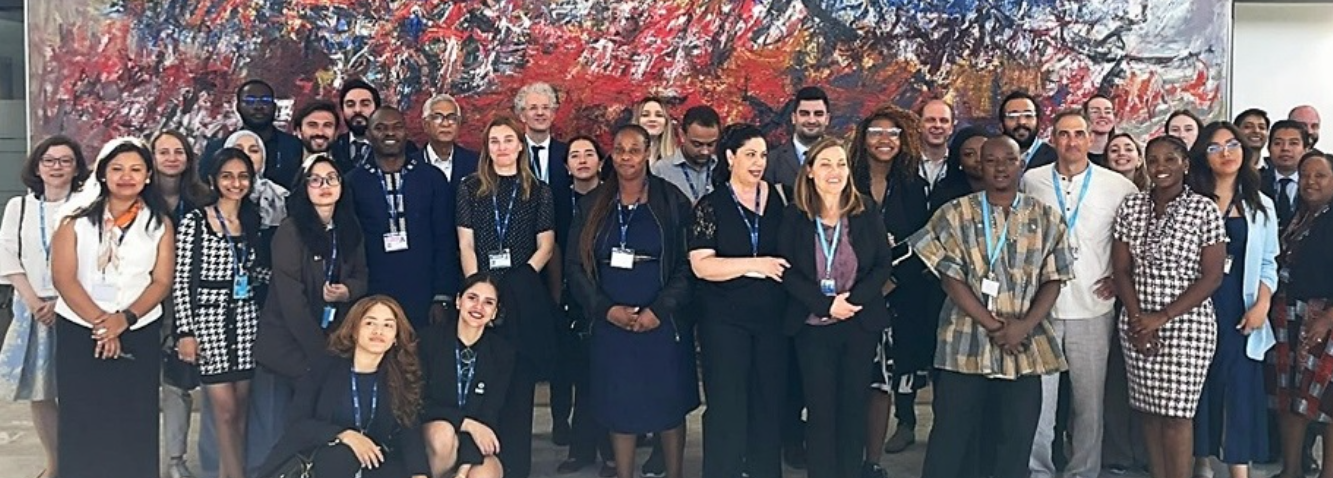
At the Seventy-ninth World Health Assembly, the WHO Civil Society Commission demonstrated how structured engagement can translate diverse civil society perspectives into coordinated priorities that inform global health decision-making. Through four events held during the Health Assembly, more than 300 participants helped advance priorities on sustainable health financing and stronger civil society participation in global health governance.
The Commission, which brings together more than 540 civil society organizations across all WHO regions, provides a unique platform to convene diverse perspectives, build consensus and strengthen dialogue among civil society, WHO and Member States.
Drawing on a year-long consultation process across its network, the Commission brought together nearly 300 civil society voices representing almost 270 organizations to identify four shared priorities. These were presented directly to WHO leadership, Member States and parliamentarians.
“The Commission provides a structured platform, where civil society can develop shared priorities to engage with WHO and its Member States in a coordinated and inclusive manner. WHA79 showed what that looks like when it works,” said Dr Gaudenz Silberschmidt, Director, Partnerships and Financing at WHO.
One of the Commission's key priorities during the Health Assembly was sustainable health financing amid tightening fiscal space and declining development assistance.
At an official side event on domestic health financing, co-hosted with the Republic of South Africa, Save the Children, World Vision and Medicus Mundi, more than 120 participants explored practical approaches for strengthening domestic health financing in an increasingly challenging global funding environment.
In a video message, Professor Mariana Mazzucato, Professor in the Economics of Innovation and Public Value at University College London and Chair of the WHO Council on the Economics of Health for All, challenged participants to rethink economic priorities:
“Health is not a sector that supports the economy. Health is an objective the economy must be designed to deliver.”
Country experience illustrated this shift. When USAID and PEPFAR funding was cut, South Africa moved quickly to reassess domestic options.