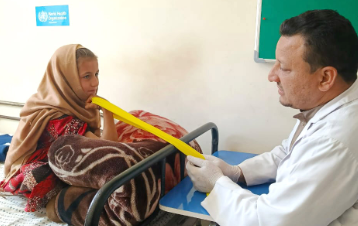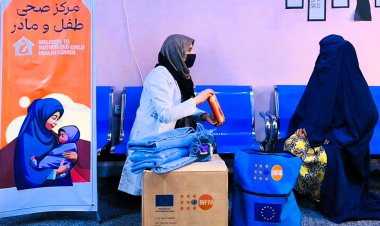
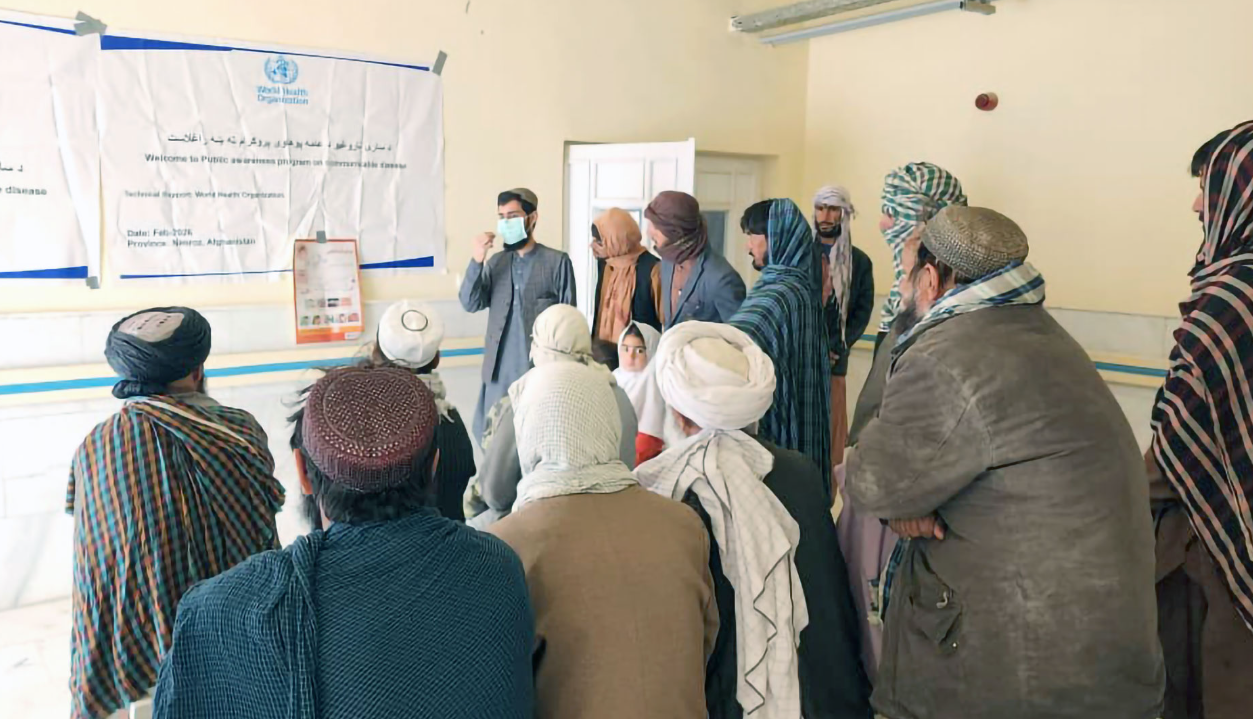
At the Zero Point of Milak Border Crossing in Nimroz Province, southwestern Afghanistan, 30-year-old social mobilizer Ferishta Zahedi stands before groups of women and returning families, speaking in a calm and friendly voice. “I am here because your health and your family’s health matter. I want to share simple but important information that can help you protect your children and loved ones from infectious diseases.”
For many of the women she meets, it is the first time that someone has taken the time to explain serious diseases such as acute respiratory infections, acute watery diarrhoea and Crimean-Congo haemorrhagic fever in ways they understand.
Returnee populations often face heightened health risks due to overcrowding, limited access to services and low awareness of disease prevention. Recognizing these vulnerabilities, the World Health Organization (WHO) has trained and deployed 15 social mobilizers, nearly half of them women, to ensure health messages reach diverse community groups, including women and girls who may have limited access to information.
Over the course of the intervention, nearly 15 000 people have been reached, including 4278 women and girls. Around 20 000 information, education and communication materials have been distributed, together with soap to reinforce key hygiene and sanitation practices. Awareness sessions focus on preventing, recognizing early and seeking timely care for infectious diseases such as acute respiratory infections, acute watery diarrhoea, Crimean-Congo haemorrhagic fever, dengue fever and measles, and the importance of routine immunization.
Ferishta’s presence as a female social mobilizer makes it easier for women and girls to gather, ask questions and speak openly about their concerns. In communities where women often stay at home, this direct engagement is powerful. It means mothers learn how to protect their children from measles and other vaccine-preventable diseases, and families understand when to seek care.