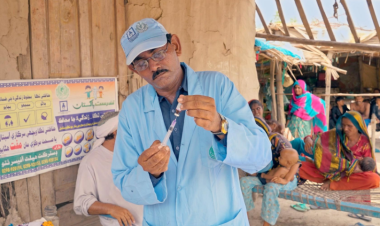

Pakistan has expanded its national response to Antimicrobial Resistance (AMR) through a multi-sector surveillance and laboratory strengthening programme supported by the United Kingdom’s Fleming Fund, positioning the country among a growing number of developing economies investing in advanced disease monitoring systems as drug-resistant infections increasingly threaten public health systems, economic productivity and healthcare financing globally.
Since 2019, the Fleming Fund Country Grant Pakistan (FFCGP), implemented by development firm DAI alongside partners including the Liverpool School of Tropical Medicine, Health Security Partners and Shifa International Hospital, has supported reforms across human health, veterinary medicine, aquaculture and environmental monitoring under a One Health framework designed to address the interconnected drivers of antimicrobial resistance.
The programme comes as AMR is emerging as one of the most significant long-term risks to global health systems. According to the World Health Organization, antimicrobial resistance already contributes to millions of deaths worldwide as bacteria, viruses, fungi and parasites evolve resistance to treatments previously used to control infections. The economic implications are equally significant, particularly for lower and middle-income countries where healthcare infrastructure remains under pressure, and infectious diseases continue to impose heavy fiscal and productivity costs.
Pakistan’s response has focused on strengthening surveillance systems, laboratory quality, genomic sequencing capacity and antimicrobial stewardship programmes to improve detection, reporting and policy coordination. The initiative has also supported the development of Pakistan’s National Action Plan on AMR and established One Health AMR secretariats at national and provincial levels to coordinate cross-sectoral policymaking.