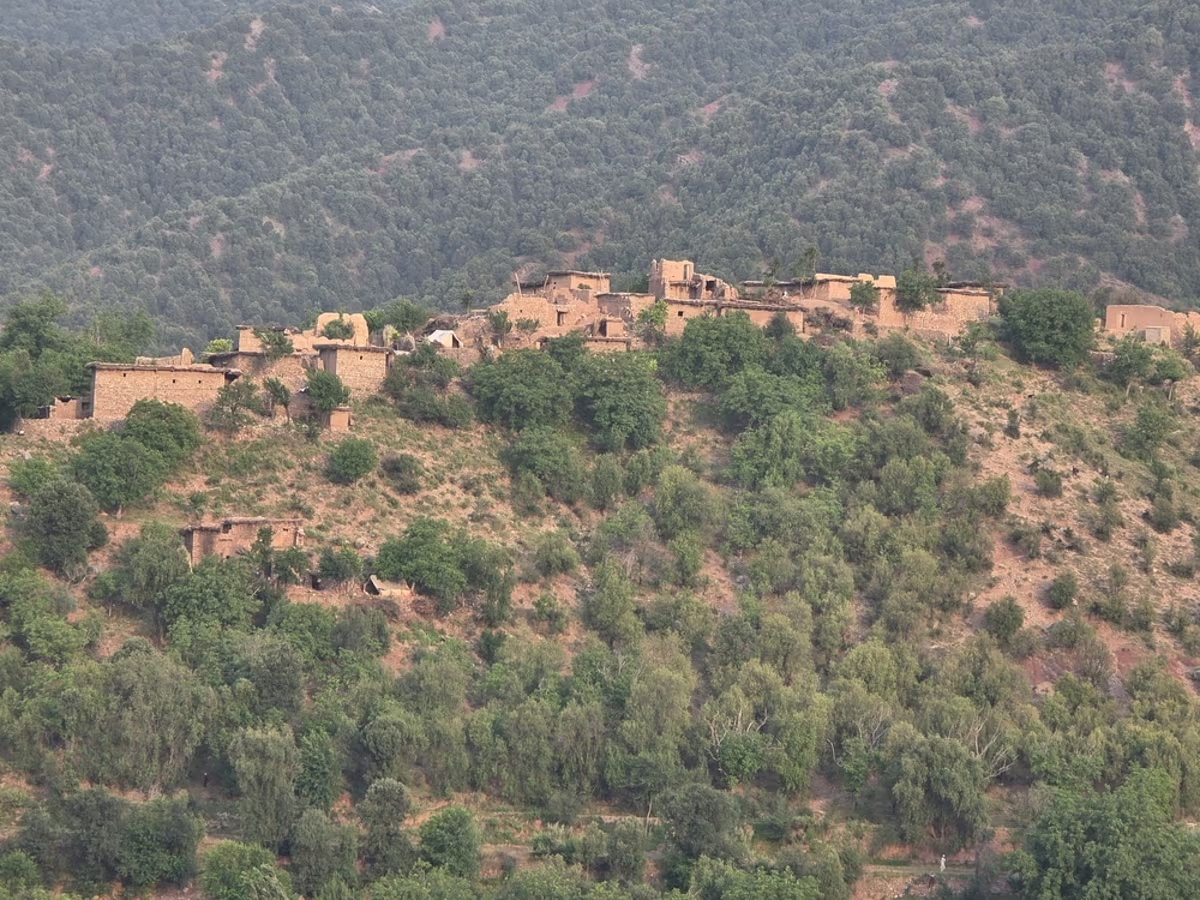
After more than a decade of being displaced from their homes by conflict, people have been returning to Tirah Valley, a mountainous area in the northwest of Pakistan’s Khyber Pakhtunkhwa province, near the Afghan border. Families have been returning to the valley since 2022, encountering their damaged homes, facing a lack of basic services, and seeing little sign of the support they had been promised for rebuilding their lives. A Médecins Sans Frontières (MSF) team has been caring for the returning communities, operating a clinic in Tirah since May 2022.
Until the early 2000s, Tirah, in the region formerly known as Federally Administered Tribal Areas (FATA), experienced relative stability. However, the situation shifted dramatically in the aftermath of the September 11 attacks and the subsequent US-led war in Afghanistan. The area soon became the scene of prolonged conflict from clashes between armed groups to conflict between state forces and various armed groups, including Tehrik-i-Taliban Pakistan, Lashkar-e-Islam, and Ansar-ul-Islam. From 2009 onwards, military operations by the Pakistan Armed Forces against the armed groups led to the mass displacement of thousands of people.
As security situation improved, families have been returning to Tirah since 2022, yet hardship persists: electricity, schools, transport, markets, health centres and communications remain scarce, with most areas still lacking mobile or landline coverage. Communities are steadily trying to rebuild, even as violence and clashes between security forces and armed groups continue to affect the region, and government services are still limited.
Dost Muhammad is nearly 80 years old, and starting over seems impossible to him. He now lives in a tent, not by choice, but because his home was lost during the conflict. “Our businesses were destroyed, and there is no real livelihood here,” he says. “Before our displacement, we had a booming trade with Afghanistan. Now, there is nothing left. Our homes were destroyed, and we don’t have the means to rebuild. We have no income, and we haven’t received the promised financial compensation [for damaged houses] yet.”