Responding to crisis within hours
When a powerful earthquake struck Afghanistan’s Kunar province in the waning hours of 31 August 2025, communities already living with conflict and displacement faced another blow. The exact toll is difficult to quantify but reports from local and international media suggest at least 2200 people killed and more than 3600 injured across Kunar and neighbouring Nangarhar provinces. WHO’s Eastern Mediterranean Regional Office also noted that confirmed numbers remain fluid as assessments continue.
For Dr Abdul Alimi, the national Mental Health and Psychosocial Support (MHPSS) officer in Afghanistan, the disaster was both urgent and deeply personal. Having spent nearly two decades building mental health into Afghanistan’s health system, he knew that rapid psychosocial support would be just as critical as physical care.
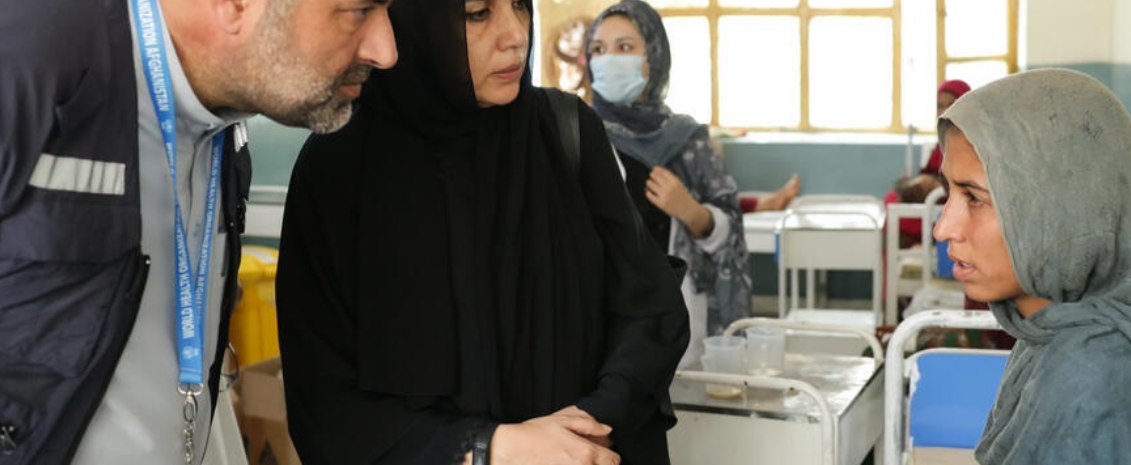
Within 48 hours, WHO—working alongside national authorities and partners—mobilized three mobile MHPSS outreach teams to the affected areas. Before the earthquake, WHO trained over 612 healthcare staff in the eastern region, including 207 community health workers, in psychological first aid (PFA) and stress management.
Within a week, Dr Alimi was on the ground with them. WHO produced and distributed 56 000 leaflets and posters on loss, grief, and self-care; and Dr Alimi co-led the first meeting of the MHPSS technical working group to coordinate the response across agencies — all done by 7 September.
His colleague Dr Basharat Hussain, WHO Technical Officer for Mental Health, underscores the urgency: “People were coming to the regional hospital with injuries, but also with grief, insomnia, and psychosocial distress. We needed to be there.”