In Dera Ismail Khan district, some vaccinators travel 5-6 km to deliver a single outreach vaccination session. Others cover 30 km. In the most remote areas, the distance can extend up to 90 km – usually by motorcycle, if one is available. This is what outreach means for many of the 15,000 WHO-trained vaccinators who work for the Pakistan Expanded Programme on Immunization (EPI) to protect millions of children and mothers with life-saving vaccines.
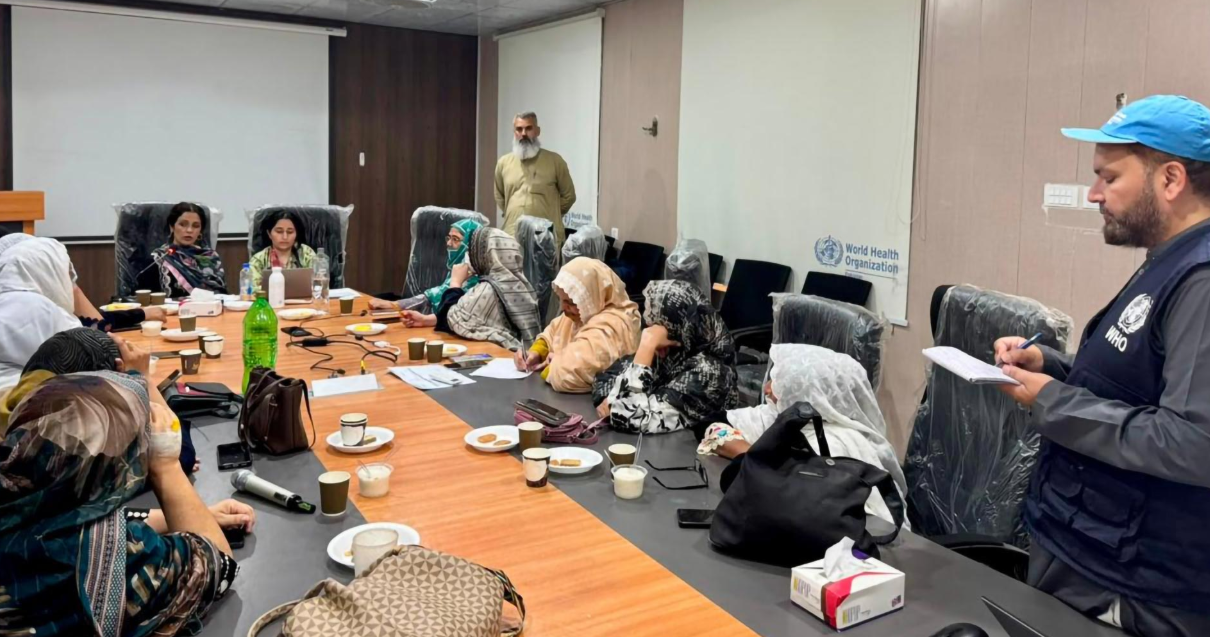
In August 2026, WHO partnered with EPI to ask 183 of these frontline workers what their daily job is like in Khyber Pakhtunkhwa province. The objective: to understand their challenges so that they can receive better support.
“I joined the health department with a passion to protect children from vaccine-preventable diseases. Hurdles are everywhere, but that does not mean I’ll quit my job,” said Nadia, a vaccinator who provided feedback during one of the 13 focus group discussions held across 7 districts.
Long distances across remote areas, difficult terrain, limited resources, misinformation, extreme weather conditions, misconceptions, lack of awareness among communities… These are some of the recurring obstacles faced by Pakistan’s routine vaccinators – around 15% of whom are women – in bringing the science behind vaccines to every community.