
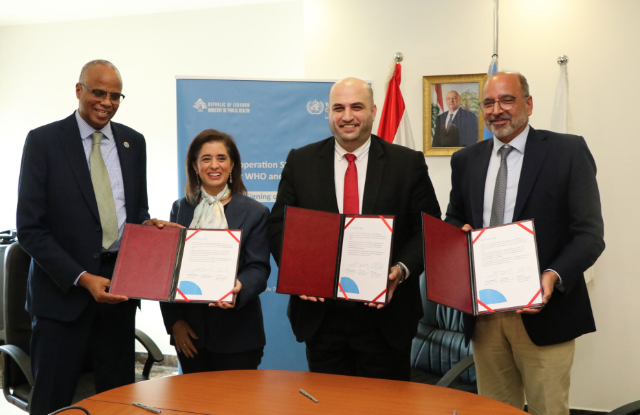
Last week, the Ministry of Public Health and the World Health Organization (WHO) launched the Lebanon Country Cooperation Strategy (CCS) 2026–2029. The 4-year framework aims to guide recovery and advance towards a resilient, inclusive health system.
Developed through an extensive consultation process, the CCS aligns with Lebanon’s National Health Strategy (Vision 2030), WHO’s 14th General Programme of Work and the UN Sustainable Development Cooperation Framework (UNSDCF).
Lebanon’s health system is under enormous pressure. Years of economic collapse and political uncertainty, combined with the latest wave of hostilities, have damaged hospitals and worsened the brain drain.
Public health indicators are declining. Maternal and child mortality and noncommunicable and mental health conditions are increasing.
There are renewed risks of disease outbreaks, particularly cholera. Fragile water, sanitation and immunization systems add to the crisis.
WHO has been a central partner in the response for the past 6 years, supporting national health institutions and emergency preparedness.
CCS 2026–2029 outlines 4 strategic priorities, developed collaboratively by WHO, the Ministry of Public Health and national and international partners. These interconnected areas address immediate humanitarian concerns and long-term development objectives.
These strategic pillars are based on careful analysis of Lebanon’s health needs and align with Lebanon’s Vision 2030, the UNSDCF and the Sustainable Development Goals (SDGs), especially SDG 3: Good Health and Well-being.