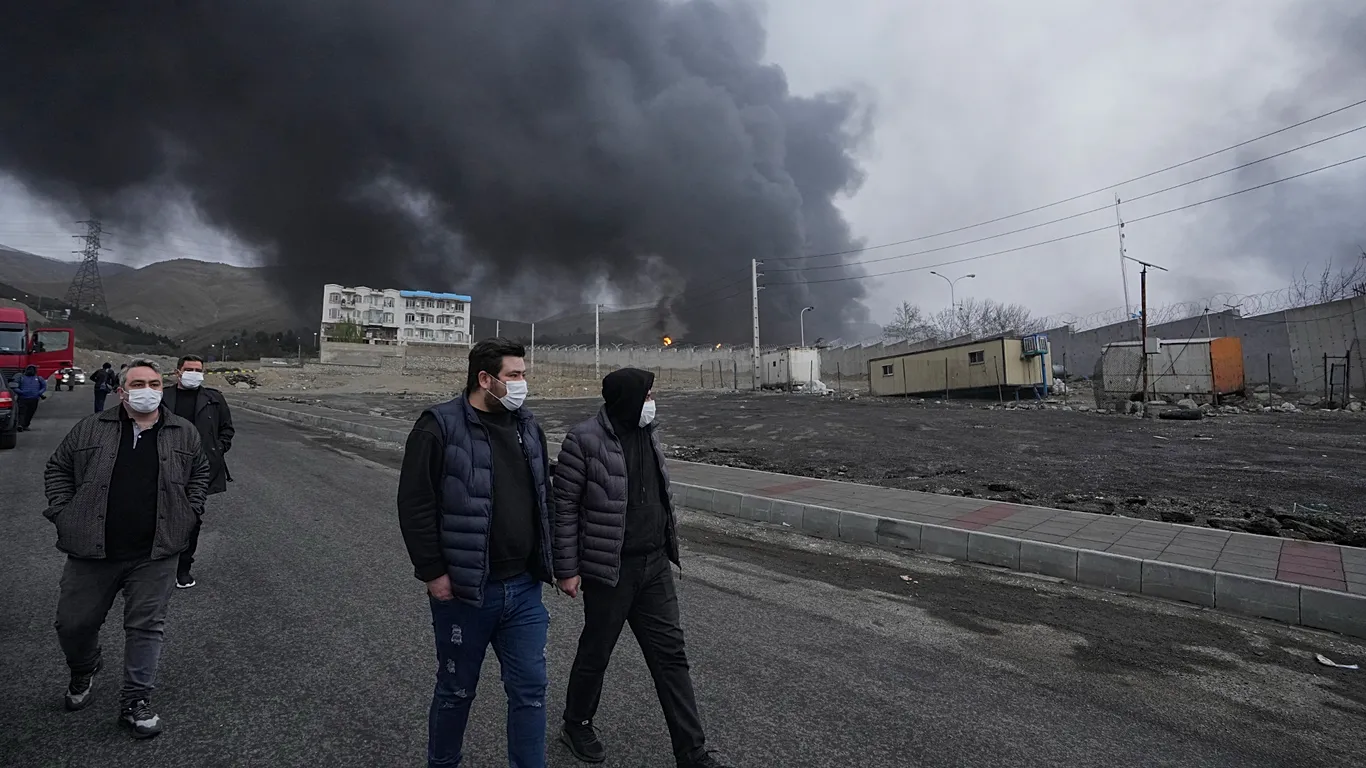
Oil depots spewing black smoke. Debris is sinking in the Persian Gulf. Missiles are pounding military sites.
The Iran war has unleashed a toxic mix of chemicals, heavy metals, and other pollutants that threaten everything from agriculture to drinking water to people’s health – and will leave behind environmental damage and health risks that could persist for decades, experts said.
“All the burning of oil and gas fields in the coastal areas, all the ships that are there, the oil tankers that are being burned or [sunk] – all of these mean pollution,” said Kaveh Madani, an Iranian scientist and director of the United Nations University Institute for Water, Environment and Health.
“For someone like me who has fought for sustainability and protection of the environment in that region, this is like going many years backward,” he added.
Documenting the damage has proved daunting, with a full accounting impossible for now, noted Doug Weir, director of the Conflict and Environment Observatory, a United Kingdom-based nonprofit that monitors environmental harms from armed conflicts.
The group uses remote satellite sensing and open-source intelligence to identify damage and score environmental risks to people, ecosystems, and agricultural land.
So far, it has recorded more than 400 environmentally concerning incidents related to the war, though much is still unknown due to delays in satellite imagery and an internet blackout in Iran, Weir said.