When fighting reached the edge of his village in southern Syria, Abu Laith, a father of five, knew it was time to leave. “We heard shelling near the school and saw people fleeing,” he recalls. “We packed the children, a few blankets, and drove off without knowing where we would sleep.”
Today, his family stays in a crowded shelter in Namer al-Hawa, a village in Dar’a Governorate, where dozens of displaced families have arrived in recent months. “My wife is six months pregnant and needs regular check-ups, but there’s no doctor in the centre,” he says. “The children keep coughing, and my youngest needs milk we can’t find. Every day, we wait and hope someone will visit with medicines.”
Since July, hostilities in As-Sweida have triggered widespread displacement across both Dara'a and As-Sweida, forcing nearly 187,000 people to flee their homes and leaving around 820,000 exposed to heightened health risks. Shelters and host communities are under strain as families crowd into shared spaces with limited water, sanitation and access to care. Health workers report rising cases of respiratory infections, diarrhea, lice and stress-related illnesses, all made worse by shortages of medicines and staff.
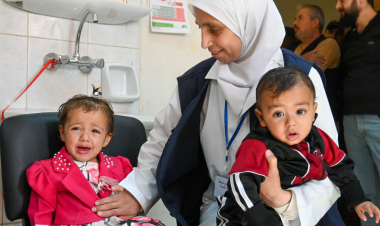
“Conditions in displacement sites are worrying,” says Louay Al-Hariri, a nurse with Lamset Shifa’s mobile medical team who previously served in Dar’a. “We see children with pneumonia, diarrhea and skin infections, and pregnant women who haven’t seen a doctor in months. Our mobile team tries to reach them, provide medicines, and raise awareness about hygiene and mental health. People need to know they’re not forgotten.”