
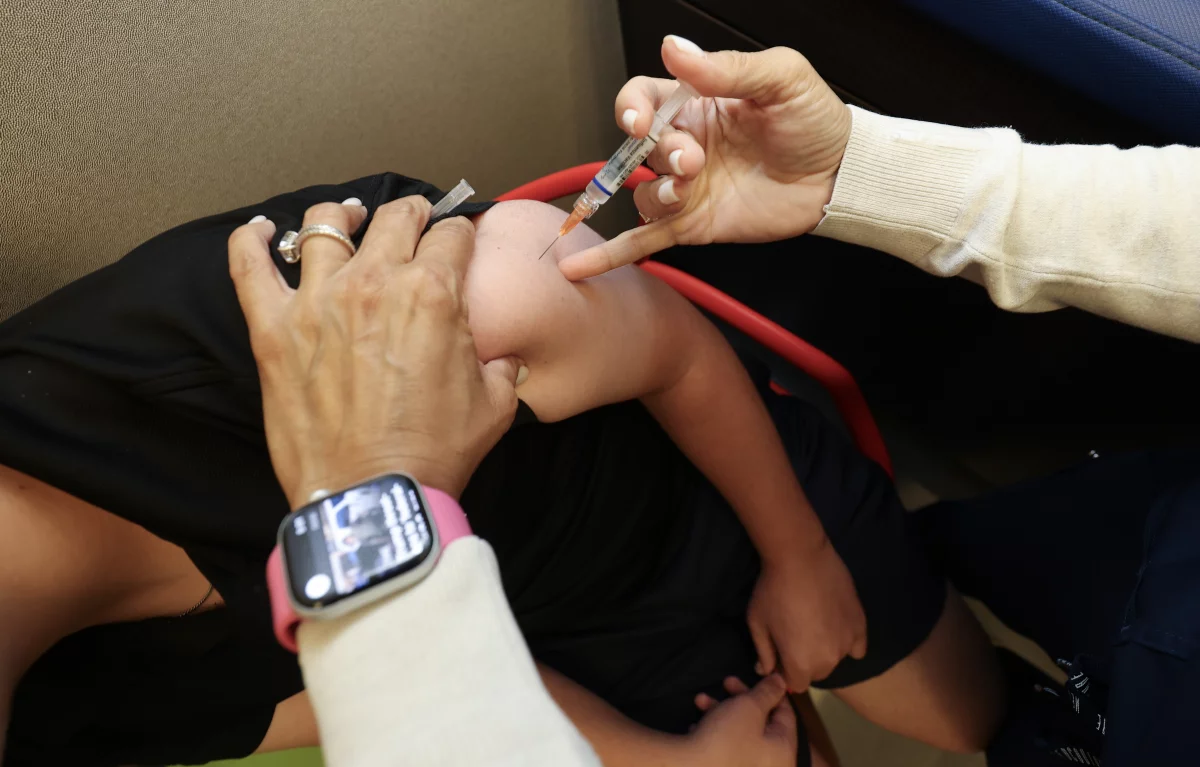
In an unprecedented change, the Centers for Disease Control and Prevention is reducing the number of vaccines routinely recommended for all children from 17 to 11.
On the new schedule, vaccines that had previously been recommended for all children — such as those for rotavirus, hepatitis A and B, meningitis and seasonal flu — are now more restricted. They are recommended only for those at high risk or after consultation with a health care provider, a category called "shared decision-making."
Health Secretary Robert F. Kennedy Jr. has long questioned the safety and effectiveness of many childhood vaccines. With this overhaul, the administration is taking a dramatic step to pare down the schedule of immunizations routinely recommended for all children.
The revamp follows a presidential memorandum that directed the Department of Health and Human Services and the CDC to compare the list of vaccines recommended for children in the U.S. with those in "peer, developed countries." That memo came out Dec. 5, the same day that vaccine advisers voted to drop the recommendation that all newborns receive a hepatitis B vaccine on the day of birth.
The advisers also heard presentations then from a senior Food and Drug Administration (FDA) official on the merits of the vaccine schedule in Denmark, which recommends fewer vaccines than the U.S., and from a trial attorney who specializes in vaccine lawsuits, on the history of the childhood vaccine schedule.