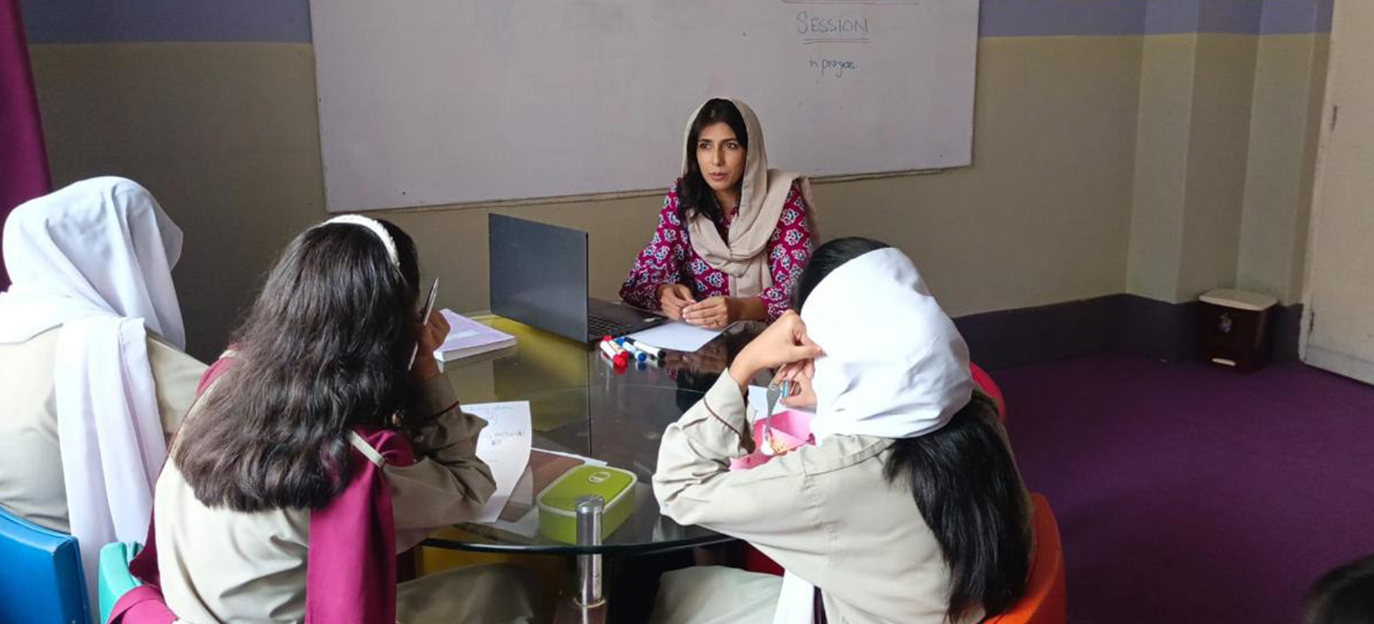
Awareness about mental health is important to address the stigmas around it,” said Sejal, a psychology student at the National University of Science and Technology (NUST) in Pakistan. She feels that people are still afraid to talk about mental health publicly and wants to do her part to address this challenge.
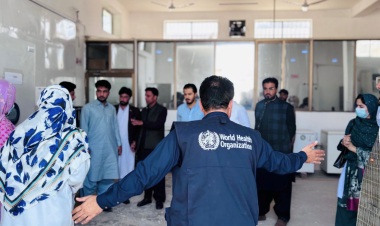
Sejal is among the Pakistani students who participated in awareness-raising sessions organized by the World Health Organization (WHO), in collaboration with educational institutions, to empower youth and health workers.
Globally, 1 in 7 people live with a mental health condition, and Pakistan is no exception. People affected by mental health issues need professional support. Needs multiply quickly, and often silently, when floods strike, when conflict displaces families and health systems are overstretched due to emergenciesNext to Sejal, Hijab Fatima, another Psychology student, nodded in agreement. "Nowadays, there are so many stressors," Hijab said. "Economic pressure, social expectations... not everyone knows how to deal with them. Mental health awareness is key to informing people about coping mechanisms, about healthy ways to manage stress, about knowing when and where to seek professional help."
In Pakistan, WHO and partners have supported the Ministry of National Health Services, Regulations and Coordination to integrate mental health services into universal health coverage. WHO is also partnering with the Ministry of Health to scale up services for mental, neurological and substance use disorders at the primary health care level through the Mental Health Gap Action Programme (mhGAP).
There is no health without mental health. Mental health problems deprive individuals of their potential, fracture families and can be an obstacle to the achievement of the Sustainable Development Goals (SDGs).