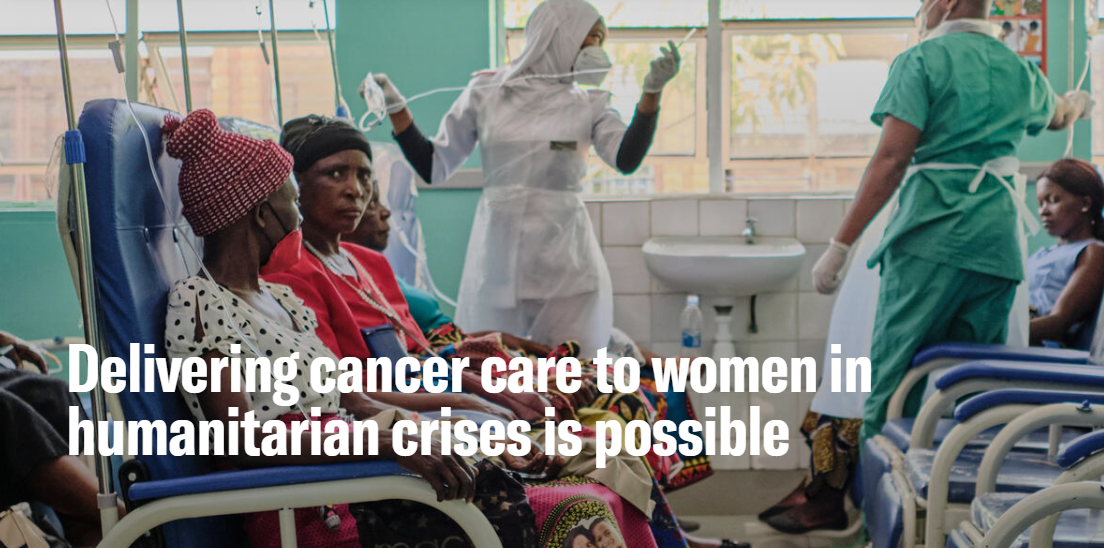
Médecins Sans Frontières (MSF) will speak for the first time at the World Cancer Congress in Hong Kong this week. We will share our experiences from our cancer programmes in Mali and Malawi, highlighting that cancer care is possible in resource-limited settings, but also that urgent action is needed to break barriers to accessing prevention, timely diagnosis and adequate treatment.
The burden of cancer is already a growing public health threat in many countries where MSF works — and women are disproportionately affected. About 80 per cent of deaths from breast and cervical cancer worldwide happen in low and middle-income countries. By 2050, global health experts estimate the number of cancer cases in such countries will rise by 150 per cent.
“Ten years ago, during the Syrian crisis, we were ill-equipped to respond to the health needs of displaced people whose treatment for non-communicable diseases, including cancer, had been abruptly interrupted by the conflict,” says Dr Claire Rieux, MSF’s medical director. “Today, our teams provide cancer care, from screening to treatment and palliative care, in several countries.”
“We partner with ministries of health, inspiring practitioners, community networks and experts in the fight against cancer,” says Dr Rieux. “We are eager to keep learning and contribute to advancing greater equity in this field.”