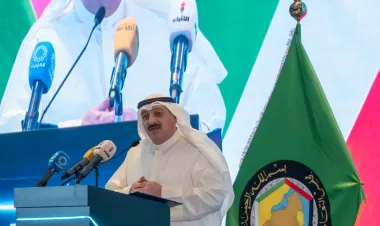
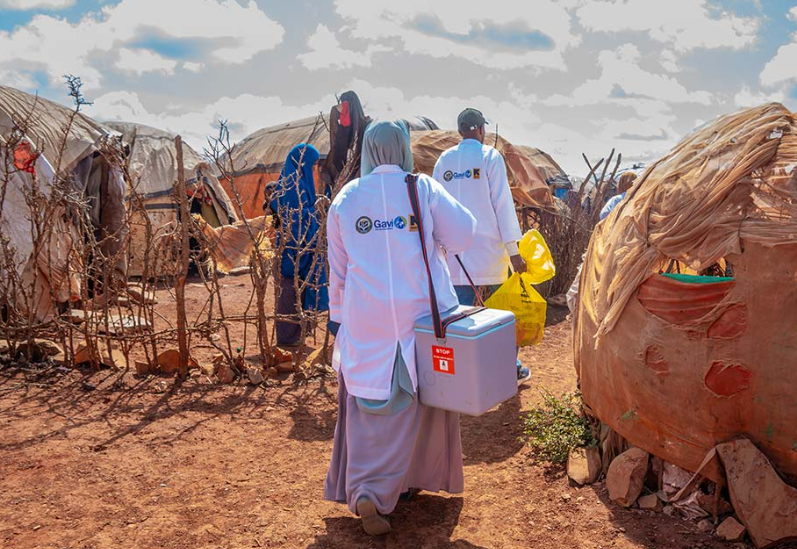
As delegates from around the world and across the private sector and civil society gather for the 2025 World Health Summit, the Reaching Every Child in Humanitarian Settings (REACH) consortium has officially administered over 20 million vaccine doses to children in humanitarian and conflict-affected settings – namely in Chad, Ethiopia, Somalia, Nigeria, South Sudan, and Sudan. REACH is funded by Gavi, the Vaccine Alliance (Gavi) and led by the International Rescue Committee (IRC), in collaboration with an array of local civil society organizations.
Despite global advances in immunization, 14.3 million children worldwide remain unvaccinated. Most live in fragile and conflict-affected settings where traditional health systems cannot safely and effectively reach them. To address this challenge and serve communities in conflict or crisis zones – some of which haven’t seen a vaccine in over a decade – ZIP, Gavi’s Humanitarian Partnerships, was launched in 2022, partnering directly with humanitarian organizations to deliver immunization to communities that government health systems have been unable to reach. As part of this programme, REACH relies on a specialized humanitarian model addressing complex barriers, leveraging the IRC’s humanitarian expertise, which has proven essential in ensuring that even the hardest-to-reach children receive the full national schedule of vaccines.
Through community-based and context-adapted strategies, REACH is now delivering more than 1 million vaccine doses every month across a range of life-saving antigens. As the programme has scaled, average delivery cost per dose has fallen from around US$ 3.75 per dose in the first year to around US$ 2 by September 2025, making routine immunization increasingly affordable and impactful even in the most fragile environments.