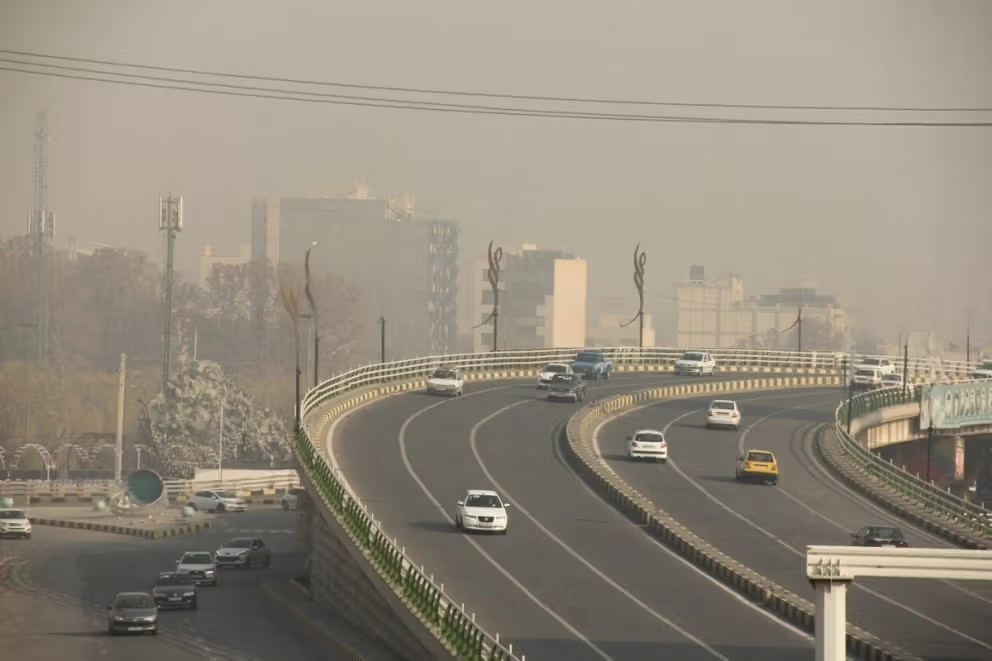
Air pollution returned to Iran’s capital and several other cities, pushing air quality back into unhealthy levels for vulnerable groups and prompting renewed health warnings, according to official data released on Friday.
The city’s average air quality index (AQI) reached 116 on Friday, placing it in the “unhealthy for sensitive groups” category, Tehran’s Air Quality Control Company said. The figure marked a sharp deterioration from the previous 24-hour average of 83, which had indicated acceptable conditions.
Since the start of the current Iranian year in March, Tehran has recorded only six days of clean air. Official figures show the capital has experienced 130 days of acceptable air quality, 113 days classified as unhealthy for sensitive groups, 20 unhealthy days for the general population, two very unhealthy days and two days deemed hazardous.
The renewed pollution prompted health warnings urging people with heart and lung disease, children, pregnant women and the elderly to stay indoors and avoid unnecessary travel, IRNA, the state-run news agency, reported on Friday.
Chronic crisis in major cities
Air quality is measured on a scale in which AQI levels between zero and 50 indicate clean air, 51 to 100 acceptable conditions, 101 to 150 unhealthy for sensitive groups, 151 to 200 unhealthy for all, 201 to 300 very unhealthy and 301 to 500 hazardous.
Air pollution has become one of Iran’s most serious public health and environmental challenges in recent years. Major cities including Tehran, Isfahan, Mashhad and Ahvaz regularly experience prolonged periods of unhealthy air, particularly during colder months when temperature inversions trap pollutants close to the ground.
Public frustration has grown as pollution episodes intensify, with many citizens saying that simply breathing clean air has become a daily struggle. Environmental specialists have long warned that weak enforcement, aging vehicle fleets and reliance on highly polluting fuels have worsened the problem.