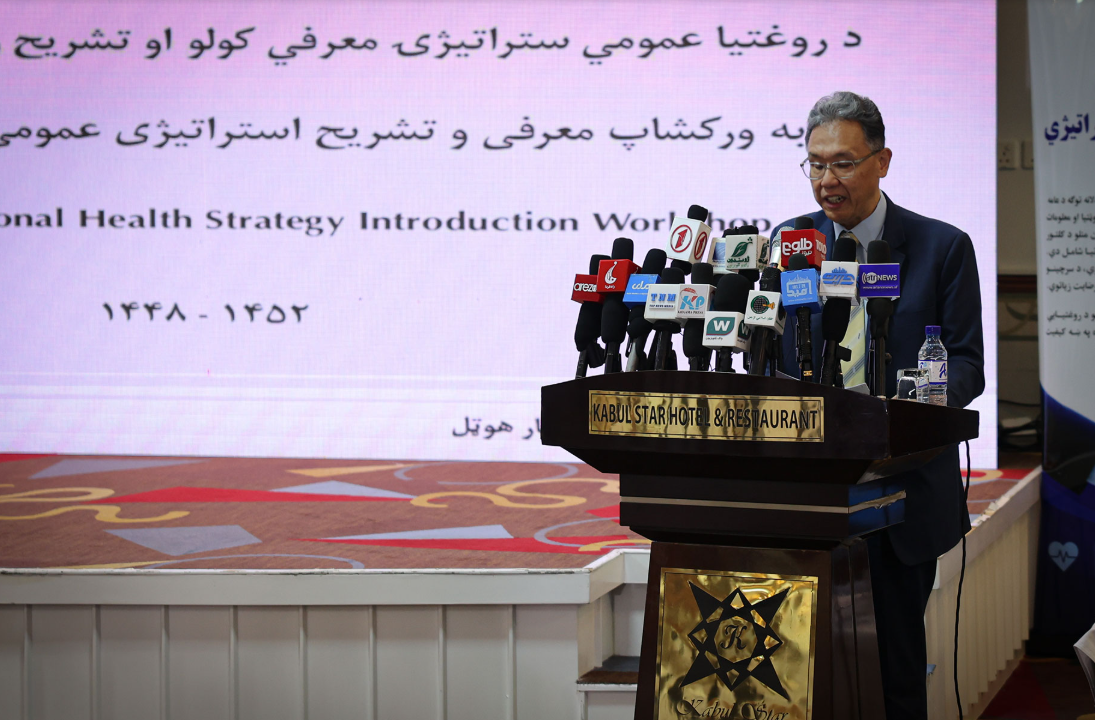
Afghanistan’s de facto Ministry of Public Health today launched the National Health Strategy 2026–2030, developed with technical support from the World Health Organization (WHO) and informed by inputs from health partners and stakeholders.
At the inauguration of the National Health Strategy, the WHO Representative to Afghanistan emphasized the importance of collective action in advancing health and well‑being for all people across the country.
The Strategy adopts a coherent approach to improving the use of resources for health. It addresses key priorities – strengthening systems for health, with a focus on high impact interventions, improving access and coordinating effectively across other sectors that impact health. By setting out a clear vision for health system transformation and a pathway towards long-term sustainable changes, the Strategy is an important step towards ensuring that every Afghan man, woman and child has access to equitable, quality and sustainable health services.
It comes as Afghanistan’s health sector is facing severely constrained funding and an ongoing polycrisis. Improving maternal and child health and eliminating malnutrition and communicable disease agendas are all unfinished. The situation is compounded by high burdens of noncommunicable diseases, a refugee crisis, the arrival of large numbers of returnees, climate-related health emergencies, substance use and mental health conditions, displacement and urbanization which combined are increasing health needs across the country.
To respond to these challenges, the Strategy focuses on seven priority areas – governance and leadership, health workforce development, sustainable financing, service delivery, access to safe medicines and health technologies, stronger health information systems and more effective partnerships.