
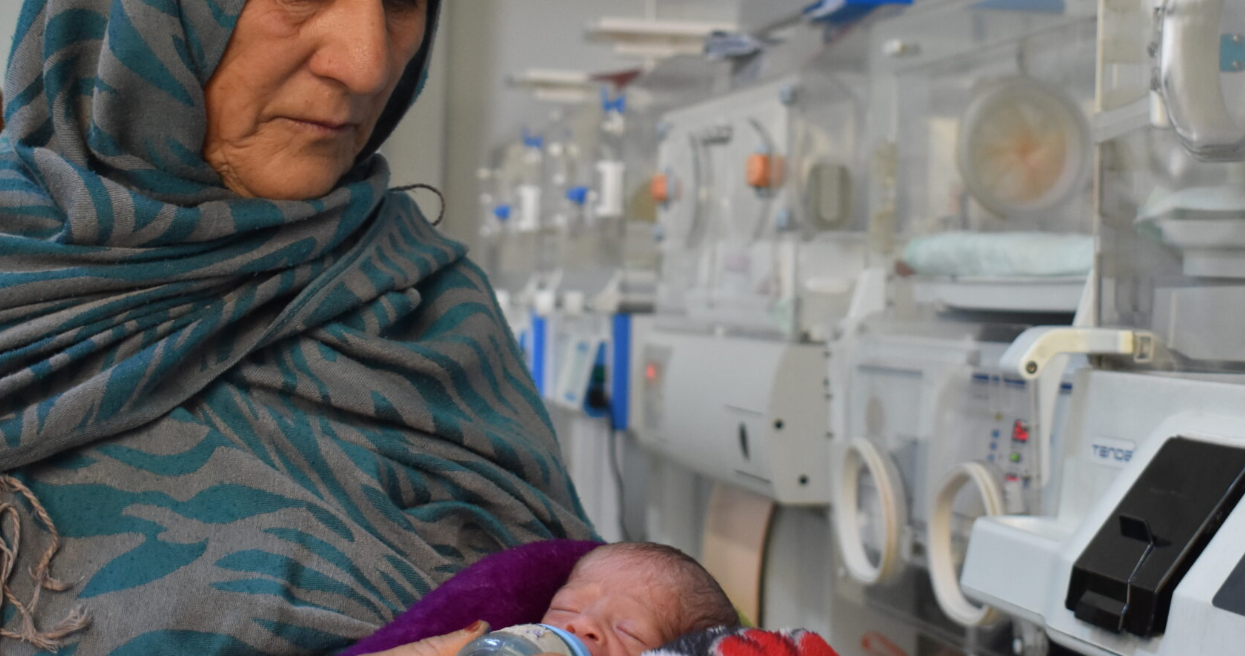
The sound of crying and beeping medical devices fills the small room. Nurses rush from bed to bed, checking vital signs. Mothers push oxygen masks onto the faces of their children.
The emergency room (ER) doctor bursts through the swinging doors of the pediatric ER in Boost hospital in Helmand.
“I have 17 patients waiting to be admitted, but nowhere to put them,” says Ahmed*, an MSF ER doctor.
It’s 6 p.m. and the night shift has only just begun. Every bed in the pediatric department is full. They are often shared by two patients and the next wave is already arriving.
“This is a crazy time for us. Day by day, more and more patients are coming,” says Ahmed.
The number of children under five coming to the ER triage at Boost hospital has more than doubled since 2020, rising from 53,923 to 122,335 in 2024. In April of this year, 13,738 children under five were seen – the highest monthly number of ER consultations since at least 2020.
Finding the space, time and resources to treat the growing number of children is a challenge. They arrive with life-threatening conditions like sepsis, respiratory failure and severe malnutrition.
This increase in pediatric patients is not just happening in Helmand, though. Health facilities are facing similar pressures elsewhere in Afghanistan, including the Mazar-i-Sharif regional hospital in Balkh province and the Herat regional hospital in Herat.
“Families are struggling to get the healthcare they need,” says Julie Paquereau, an MSF medical coordinator in Afghanistan. “Many health facilities at all levels struggle with insufficient staffing and a lack of basic medications and diagnostic equipment.”
“Lack of access will push more infants and children with life-threatening conditions to already overburdened provincial and regional hospitals, including the ones MSF supports. And some may never access care, unable to reach a health facility.”
Julie Paquereau, an MSF medical coordinator in Afghanistan